
🌿 Field Notes #008
Reminders from the nesting birds in my patch

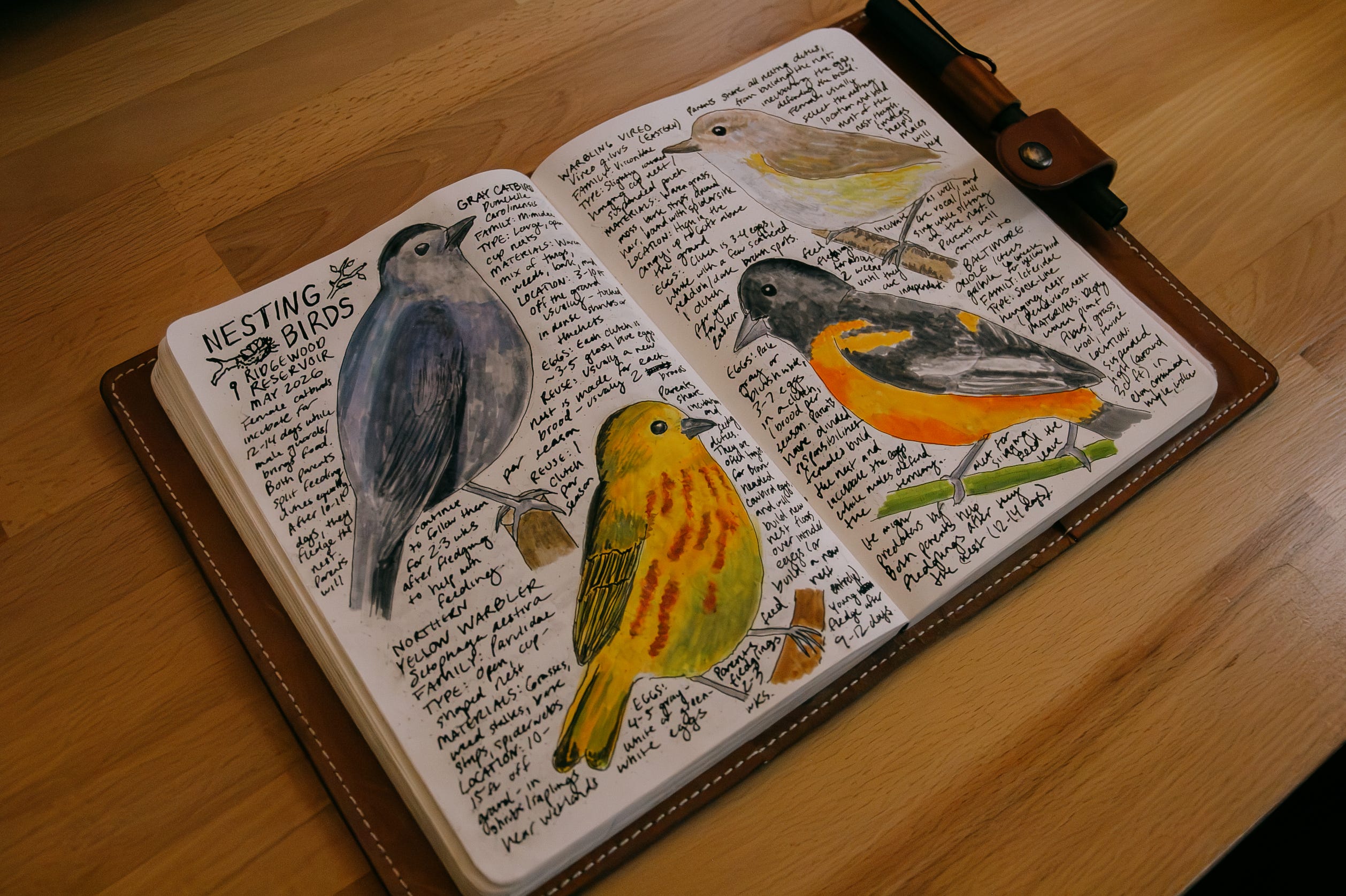
After my last post on birds’ nests, I thought I would spend some time getting to know some of the birds who nest in my local patch at Ridgewood Reservoir. This also came after I recently went on a great birding walk led by Heather Wolf for NYC H2O, a nonprofit providing education on the city’s water ecology, and Heather pointed out many species who use the Reservoir as a nesting site every year. Each of these species seem to reflect their own distinct personalities in their nest/nesting behaviors, and I am not a scientist, so I don’t mind anthropomorphizing. :) Here are some reminders from a few of the nesting birds in my area.
All of the photos in this post were taken at Ridgewood Reservoir. I usually post my bird photography over on Instagram, if you’d like to follow along there.
The enterprise and skill with which animals make their nests is so efficient that is not possible to do better, so entirely do they surpass all masons, carpenters and builders; for there is not a man who would be able to make a house better suited to himself and to his children than these little animals build for themselves.
— Ambroise Paré, quoted in Gaston Bachelard, The Poetics of Space
Gray Catbird
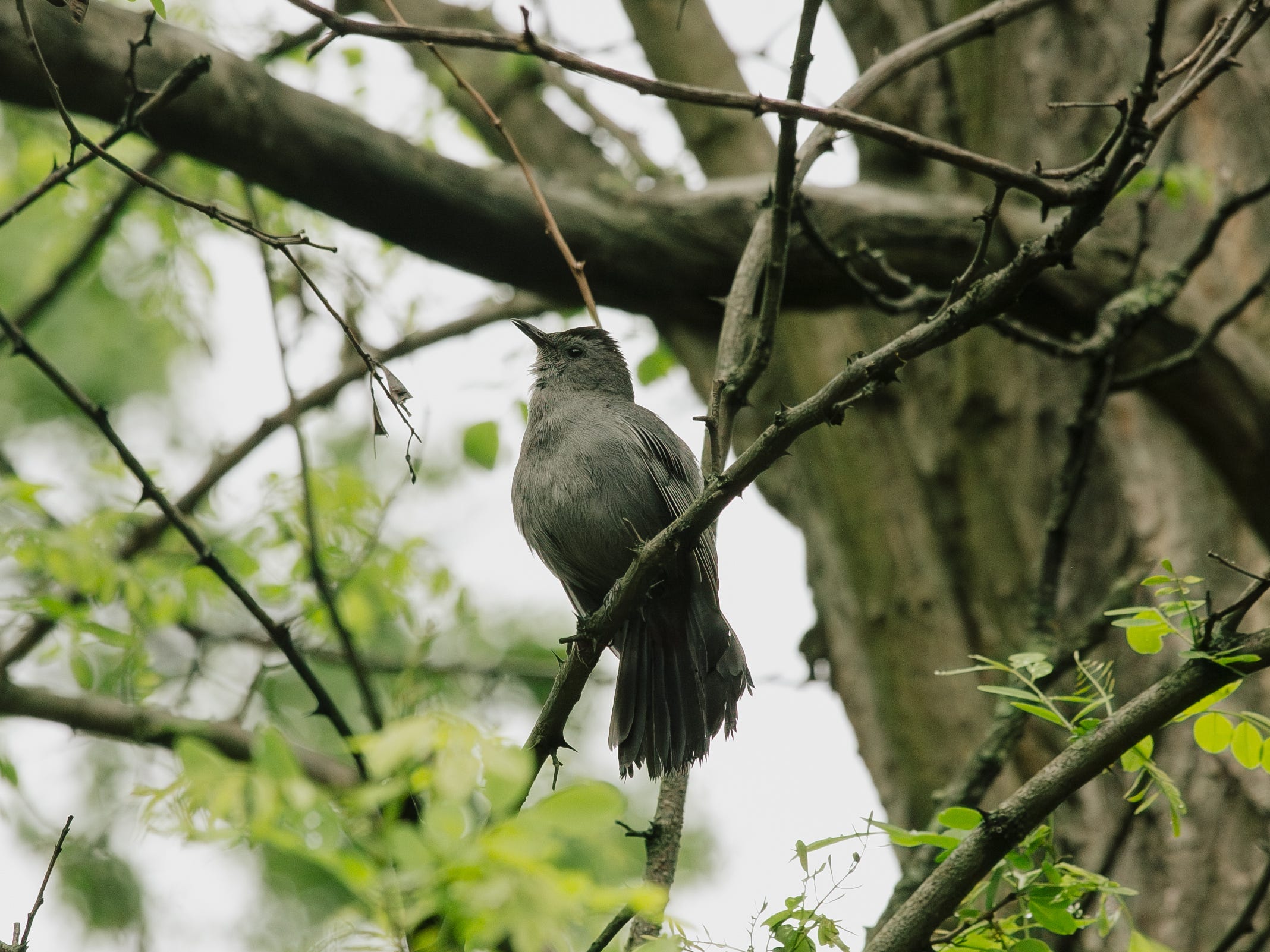
The gray catbird builds its nest low to the ground in dense shrubs, with bulky twigs, straw, bark, mud, and sometimes even trash (if you have ever met a catbird, this makes perfect sense to me). Females usually build the nests, but males will sometimes provide nesting materials, and bring the female food while she incubates the eggs. The eggs are a glossy blue color, and a deeper blue indicates a healthier female (and an antioxidant-rich diet). While their nests can be targets for the brown-headed cowbird (a brood parasite that lays its eggs in other birds nests), they are pretty good at recognizing a foreign egg and will puncture it and/or eject it from the nest.
I love the way that you can pass a singing gray catbird on a trail and it will continue to sing well into what I would consider a comfortable distance for most birds (on my walk with NYC H2O, Heather Wolf let us know that the name for a gray catbird in Spanish—maullador gris—translates to “gray meower”, which I feel is appropriate for a bird that never pipes down). They have a charismatic spunkiness and seemingly endless curiosity; they have reminded me of what it looks like when pursuit of knowledge surpasses even its fear.
Northern Yellow Warbler
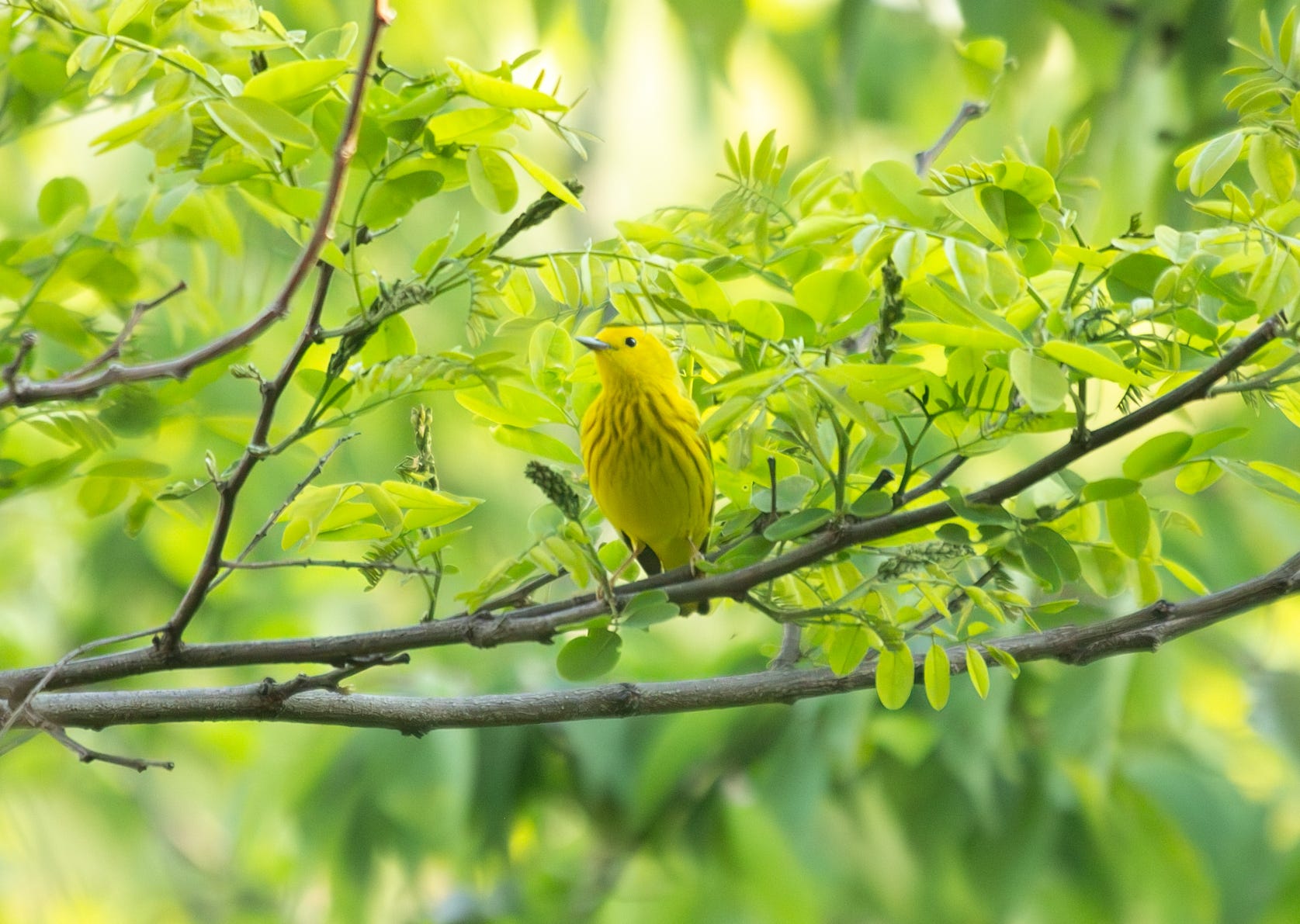
The northern yellow warbler, known for it’s “Sweet, sweet, sweet, sweeter than sweet!” call during migration season, always looks like a miniature stuffed animal to me. Something about its little button eye and rounded head never seems quite real. Their tiny cup shaped nests of grasses, bark strips, and nettles, all held together with spider silk, are built entirely by the female while the male sings its “sweet” song, guarding the territory.
The northern yellow warbler also can recognize brown-headed cowbird eggs, and are remarkably stubborn about getting rid of them: because they are often too small to eject the egg from the nest, they will simply build a new nest floor straight over the top of the clutch with the cowbird egg and start again. They have been found to build up to SIX new floors over their nests if the cowbird continues to return to lay their egg. That such a tiny, adorable creature contains such an iron force of will has reminded me to never underestimate basically anything, but especially parents, nature, and things that are small.
Eastern Warbling Vireo
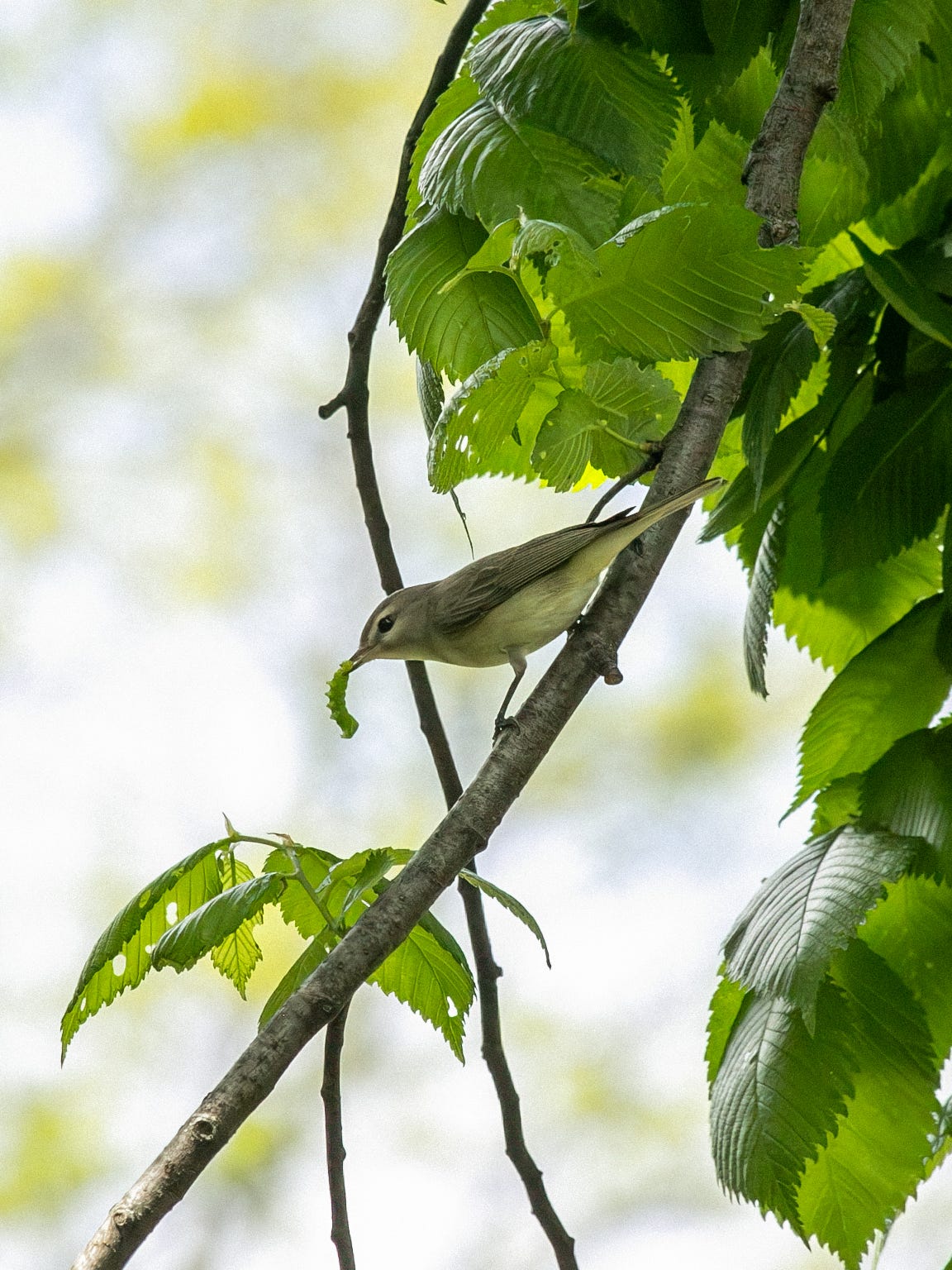
If you have warbling vireos in your area, you know that they never stop singing. It has made it harder for me to get to know other vireos because I am sometimes too quick to ID as a warbling due to their sheer numbers (at least in the park where I usually bird). In the spring, I take their songs for granted and by the fall when they’re gone I notice how much quieter the canopy has become.
They build intricate hanging nests from plant fibers, grass, leaves, and moss, held together with spider and caterpillar silk, primarily by the female. They share incubation duties, and while many birds remain quiet while incubating the nest to avoid revealing its location, the male warbling vireo simply can’t help himself and often continues singing even while sitting on the nest. As someone who generally dislikes attention in most of its forms, I find the male warbling vireo to be unrelatable, but I deeply respect his commitment to his gig. It’s a good reminder to not worry too much about what the other birds are doing.
Baltimore Oriole
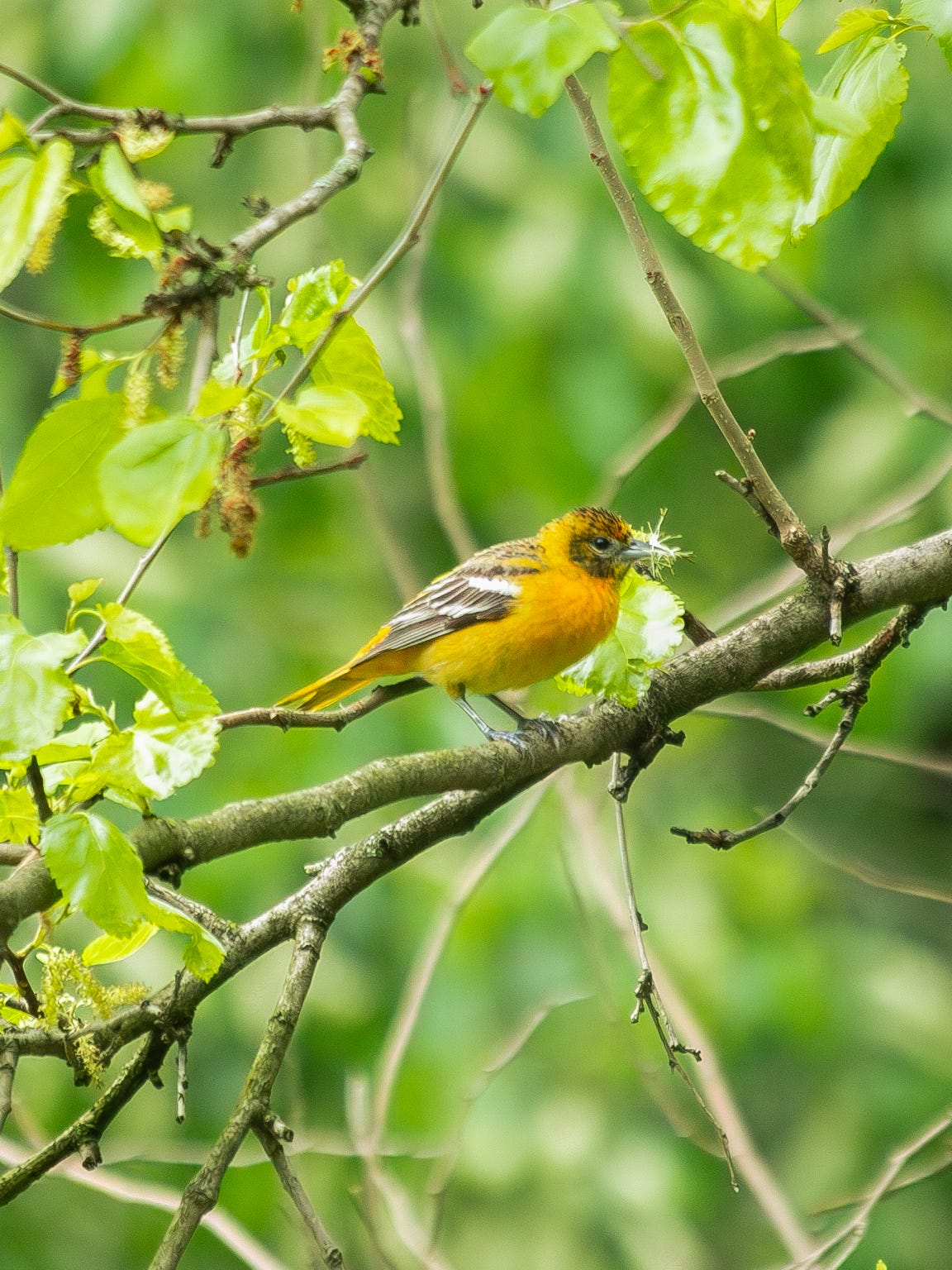
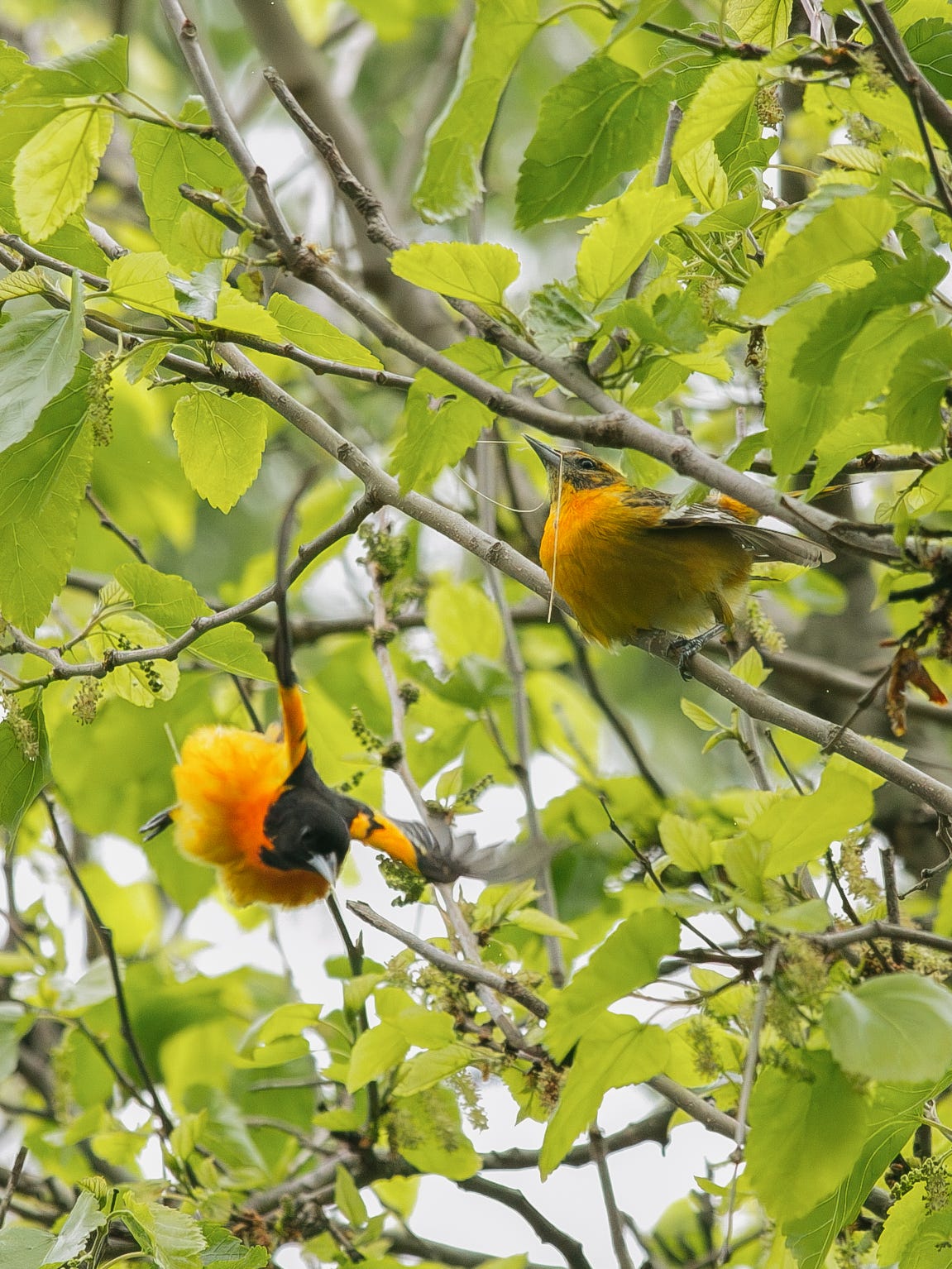
I was lucky enough to see plenty of oriole activity at the reservoir during my last visit, including this pair of orioles, with the female working hard gathering nesting materials to build a home perfectly suited for her young.
The female Baltimore oriole weaves an amazing sock-like hanging nest using plant fibers, animal hair, strips of bark, and even synthetic string, which takes about 1-2 weeks. She will usually select a spot towards the end of the a branch to discourage heavier climbing mammals (like squirrels) from trying to get to the eggs, and builds her nest with generally no help from the male. As someone who used to work in a field tangentially related to architecture, which is typically male-dominated, I appreciate the female Baltimore oriole’s commitment to her craft as a clear standout in the world of bird architects.
There is nothing in which the birds differ more from man than the way in which they can build and yet leave a landscape as it was before. Let a thousand men set up their houses in a wood, and the wood becomes a hideous small town. Let a thousand birds settle in the same wood, and it will take a skilled eye to find twenty of them, save for the black patches made by the rooks in the elms.
— Robert Wilson Lynd, The Blue Lion and Other Essays (1923)
I just discovered your account! your drawings are beautiful, and your observations, so insightful.
Awwww I love learning about birds this way! Such beautiful pictures! Also the name in Spanish made me laugh, I will research about them haha ☺️