
🌿 Field Notes #009
On birding in groups and the perils of spring migration

I live about a 45 minute subway ride from Central Park, so I hadn’t been able to attend any of the Tuesday morning Linnaean Society spring migration walks in May without being late for work–I work from home mostly, and the walks start at 7:30am, so the timing wouldn’t have worked out for the trip to be worth it. Luckily, I gave myself an extra day off the weekend of Memorial Day Weekend, and was able to make it to the very last walk of the season. I’m glad I did, because Tuesday offered perfect weather while MDW was otherwise a rainy and miserable weekend. While it was a relatively quiet birding day, there were still plenty of good moments and rich wildlife in New York City’s most popular park.
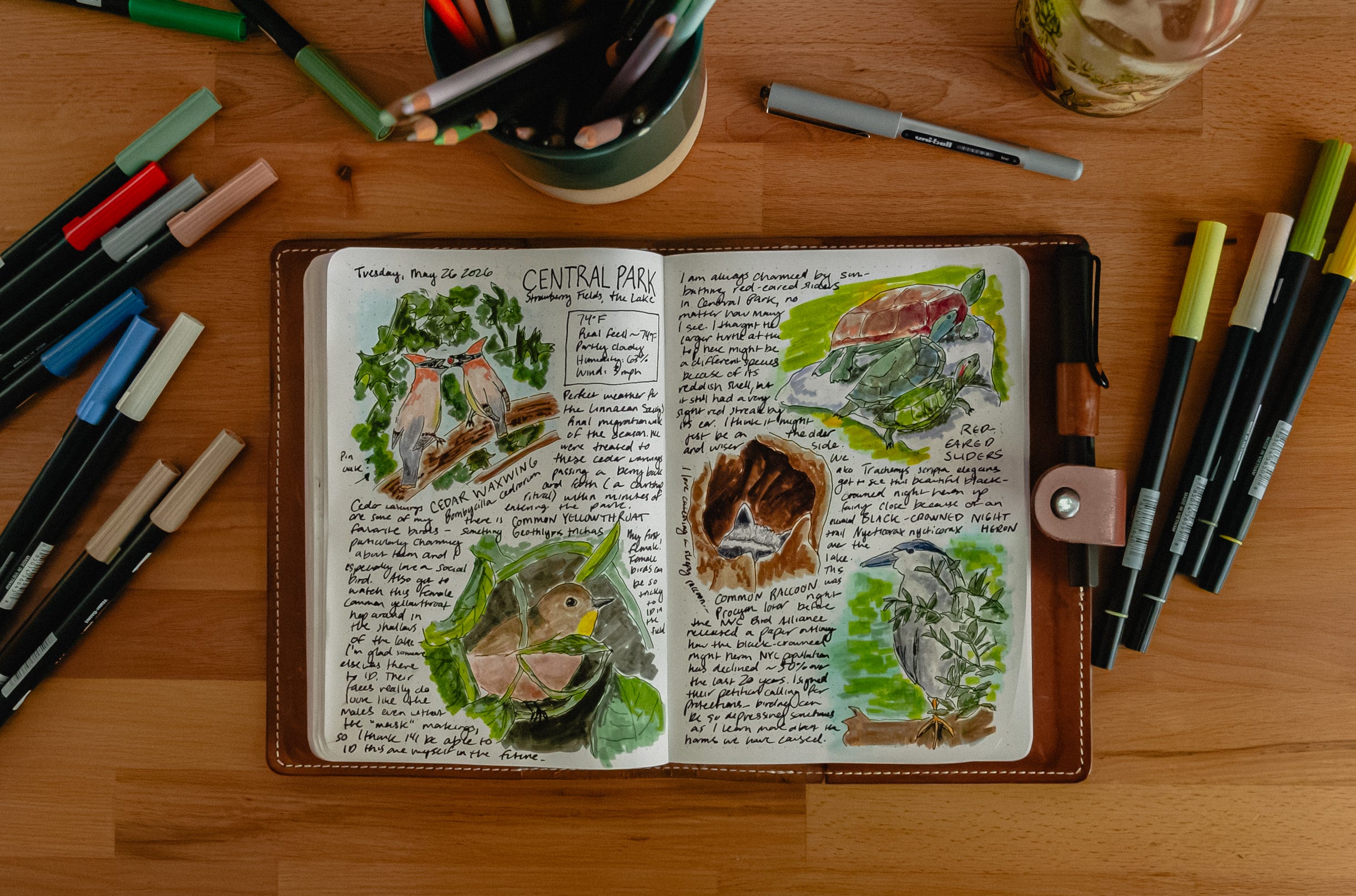
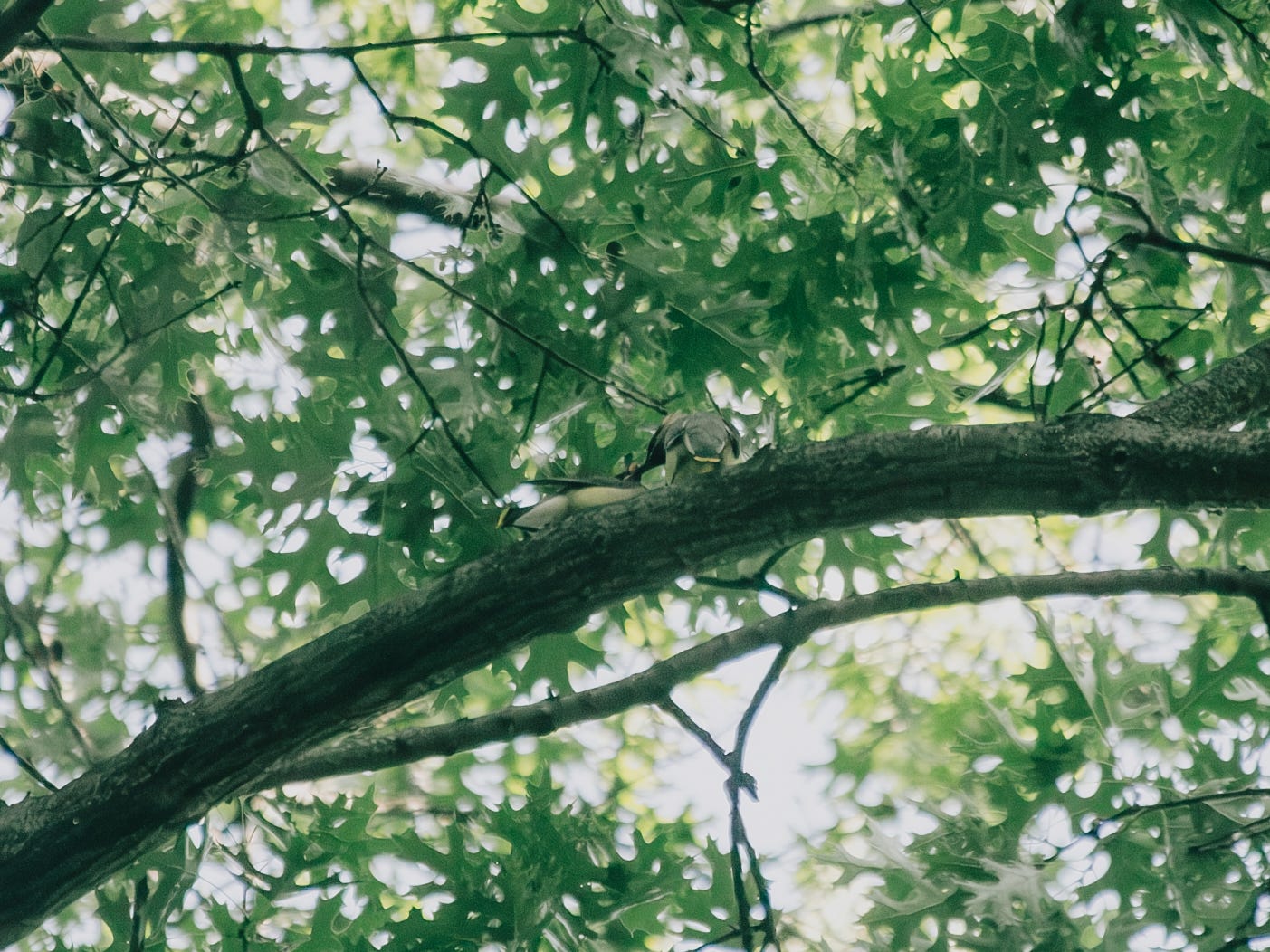
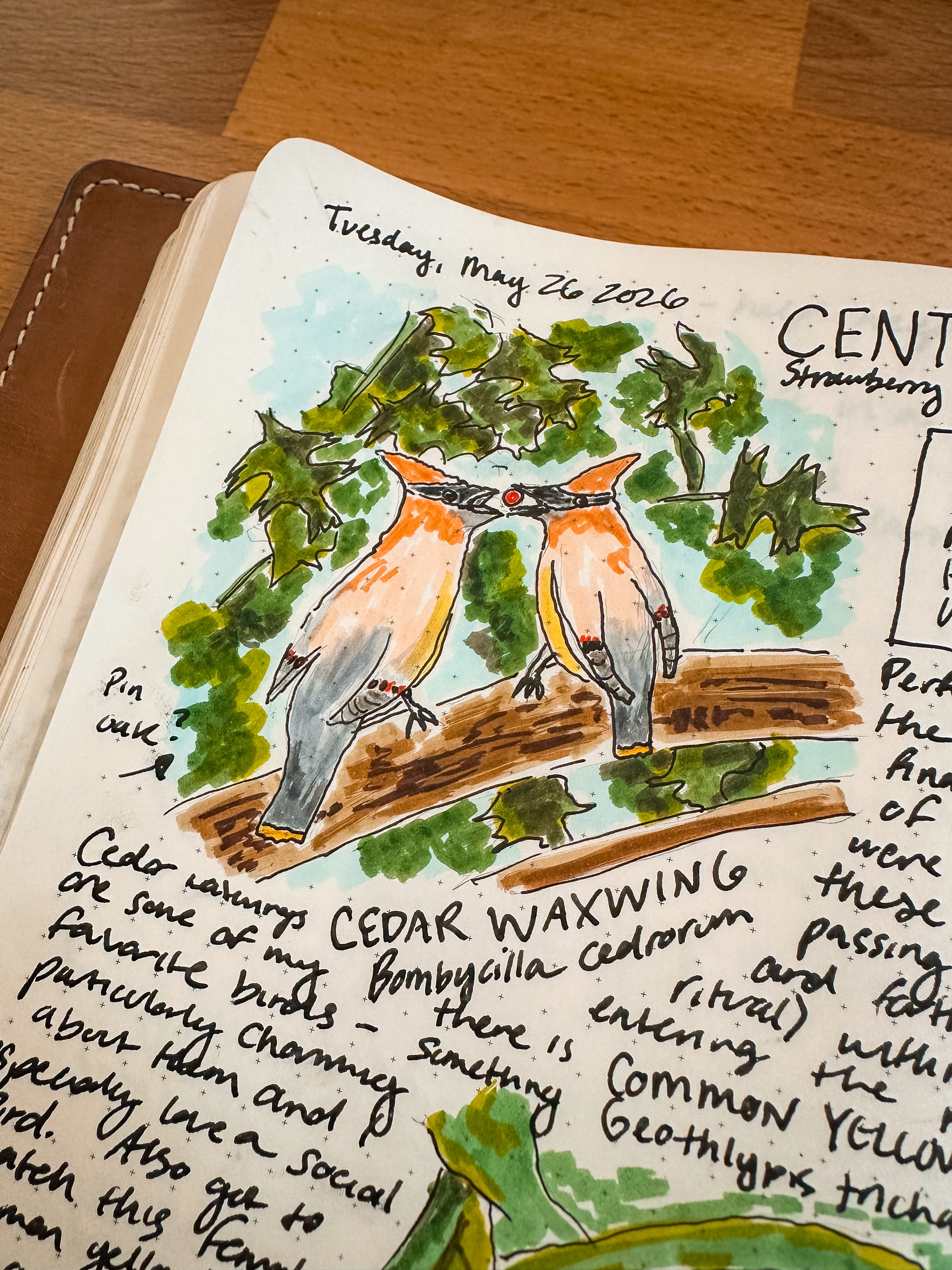
One of my favorite encounters of the day was seeing these cedar waxwings passing berries back and forth to each other (they often do this as a courtship ritual). They’re one of my favorite birds, not just for their plumage, which is striking (they get their name from the tiny red tips at the ends of their wings, which look like wax) but for their social behaviors like this one. They will also pass a berry down a line of waxwings on a branch, but I love the courtship ritual especially because of how much it mimics human courtship; the passing of the berry back and forth always seems like they’re saying, “Oh no, I couldn’t possibly, it’s for you!”. Cedar waxwings are one of the few birds that can survive on fruit only for months at a time, and they even sometimes end up accidentally intoxicated from eating fermented berries that have sat in the sun.
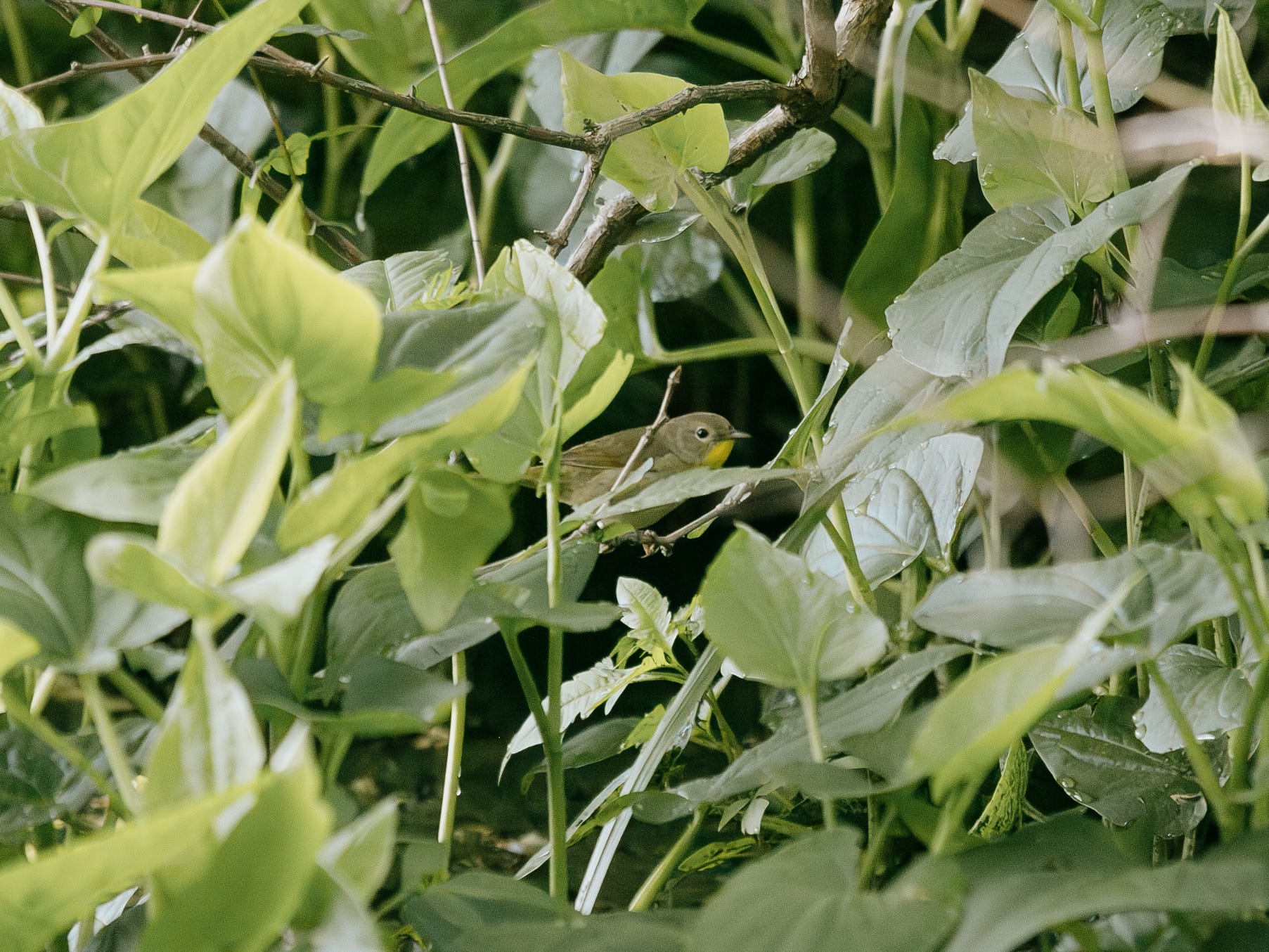
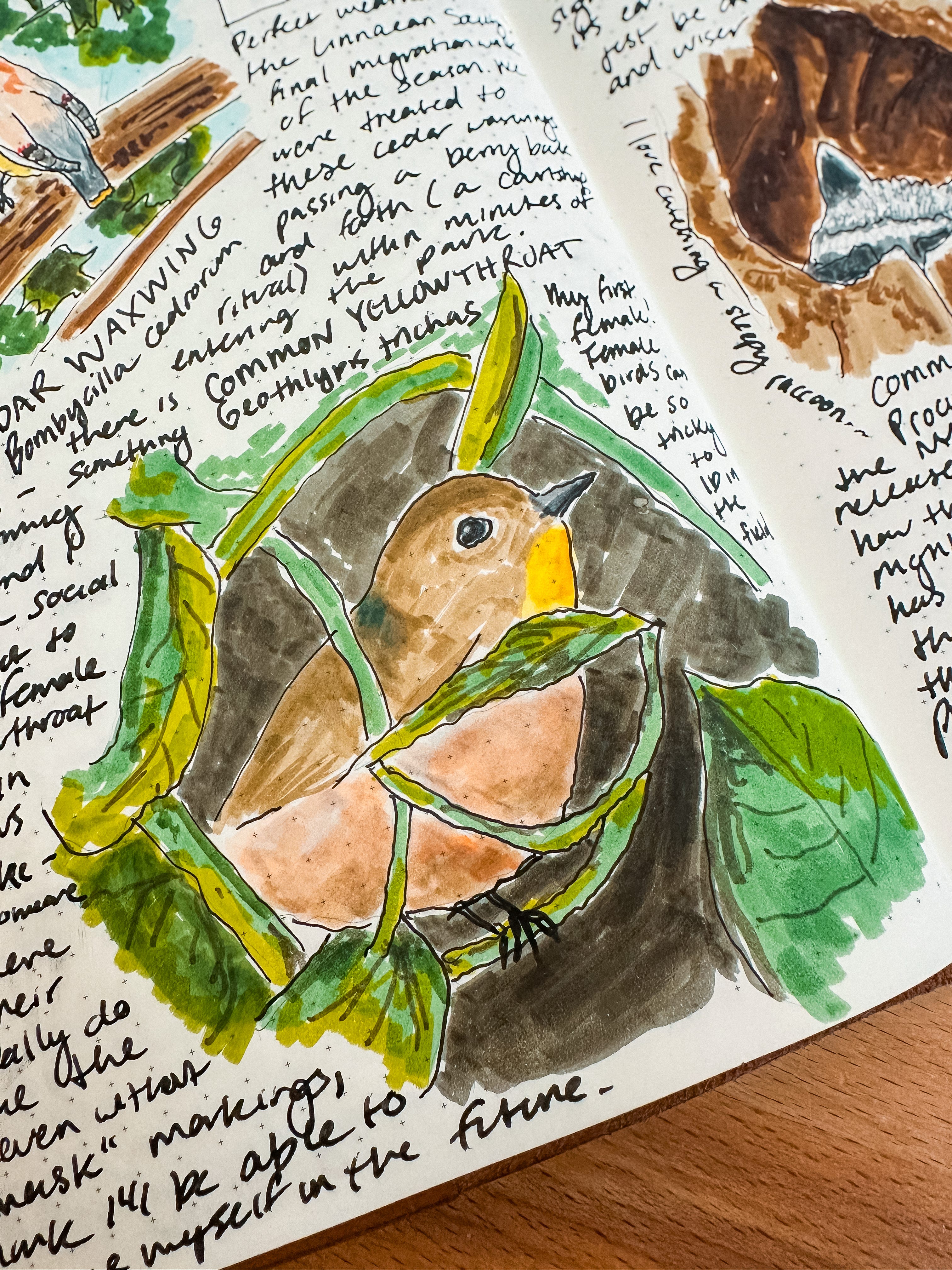
We also saw a female common yellowthroat rooting around near the shallows of the lake for insects, and I was grateful to someone else for the ID because I only got a quick glance before she disappeared into the brush. I love to bird alone but I always learn a lot while birding in a group, especially when it comes to female warblers, which I’m still learning to identify since they often lack the species’ signature look or even sometimes their namesake (I’m looking at you, female red-winged blackbirds, though they do sometimes have reddish shoulder-pads!).
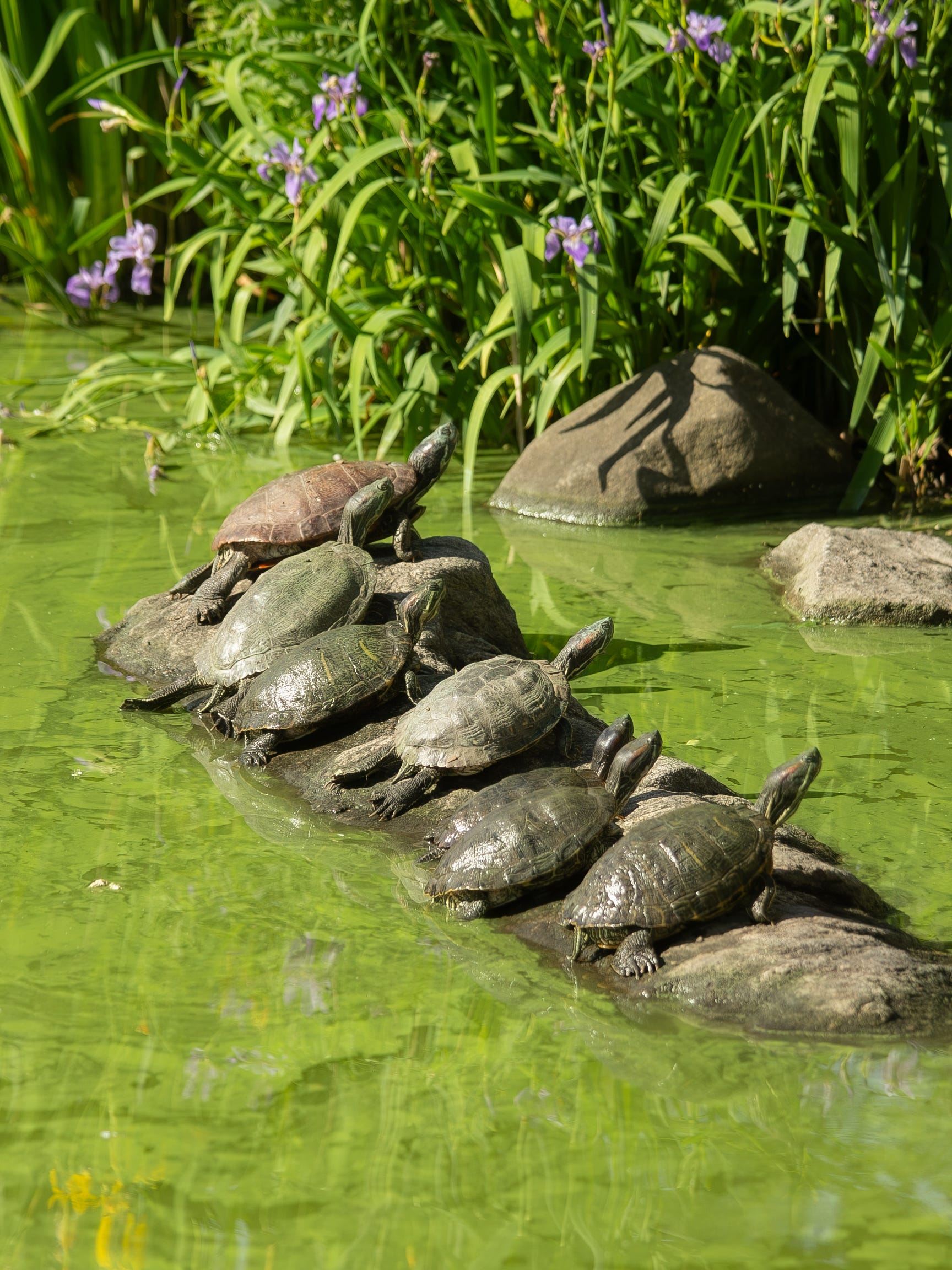
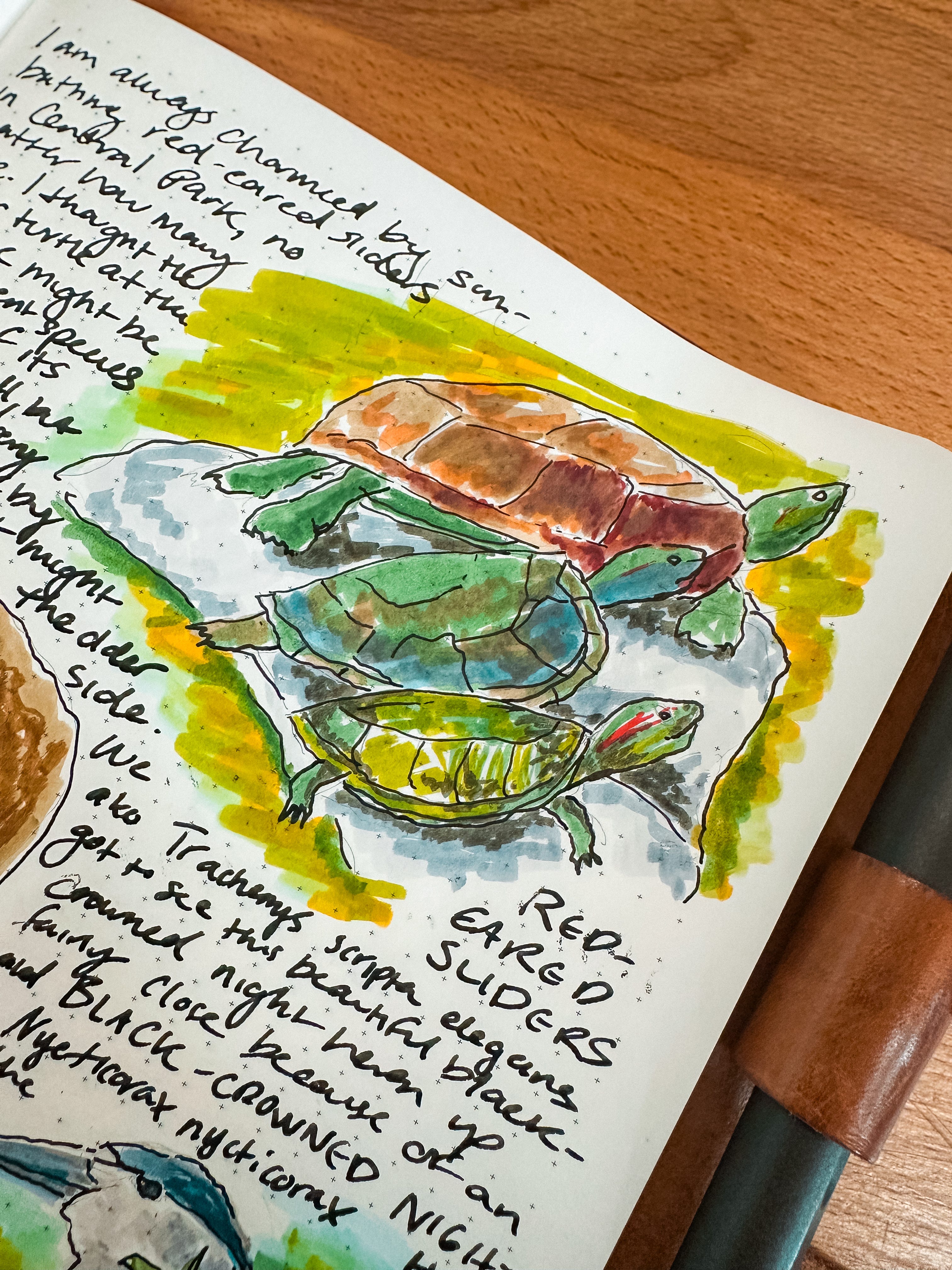
It wouldn’t be a day in Central Park without seeing dozens and dozens of red-eared slider turtles sunning themselves on logs or the large Manhattan Schist rocks (if you’re one for geology puns, the Bronx is gneiss but Manhattan is full of schist..).
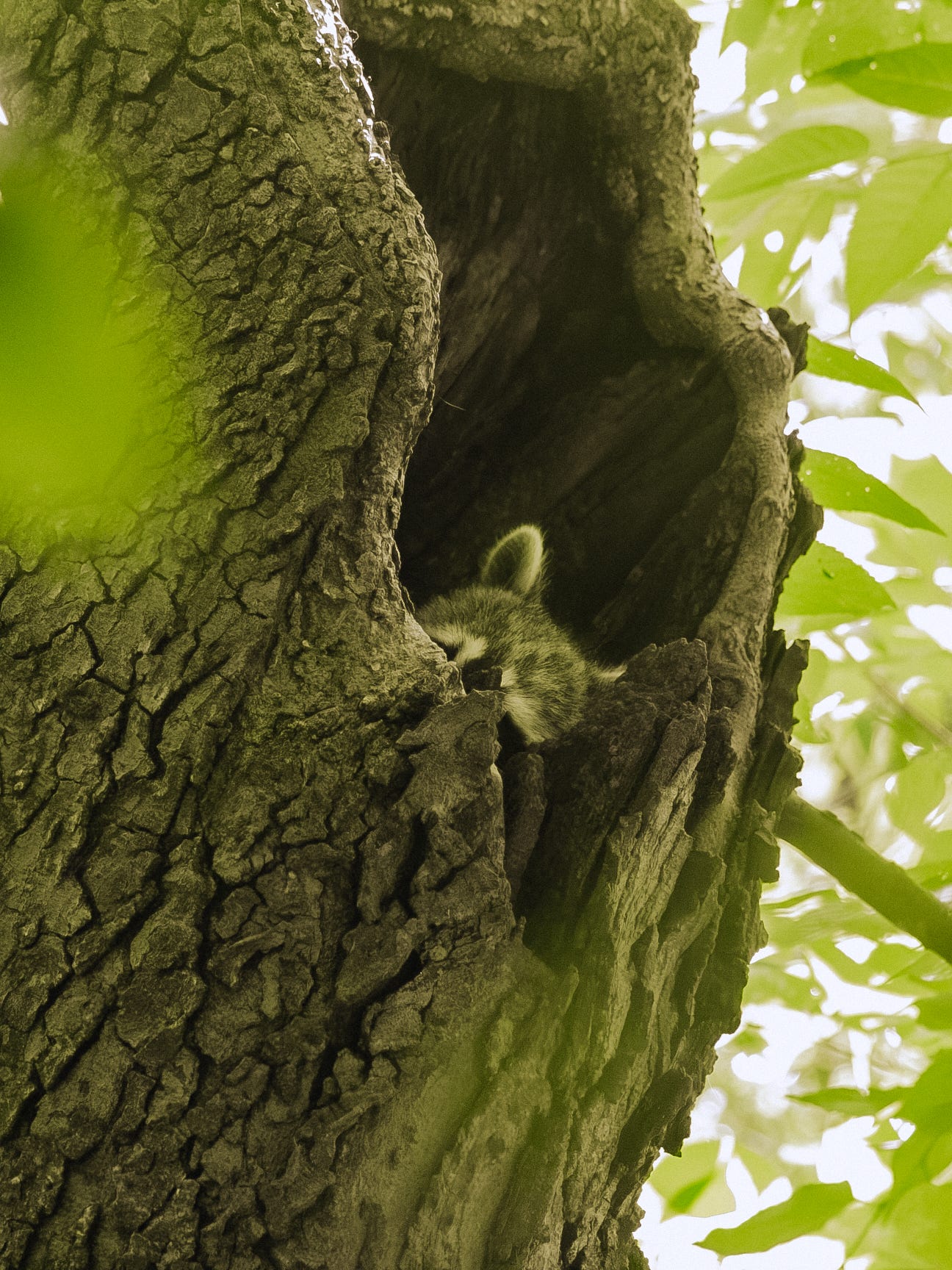
I also always love catching a sleepy raccoon while birding, especially peeking out of a tree cavity like this one was. They’re much easier to see in the winter (as a birder, you’re always looking for an out-of-place lump in a tree) but they’re numerous in the park and still often easy to catch dozing during the day even in trees that are fully leafed out. I love their adaptability and the way they always seem to be on a heist, and apparently they’re one of the only mammals that can climb down trees head first.
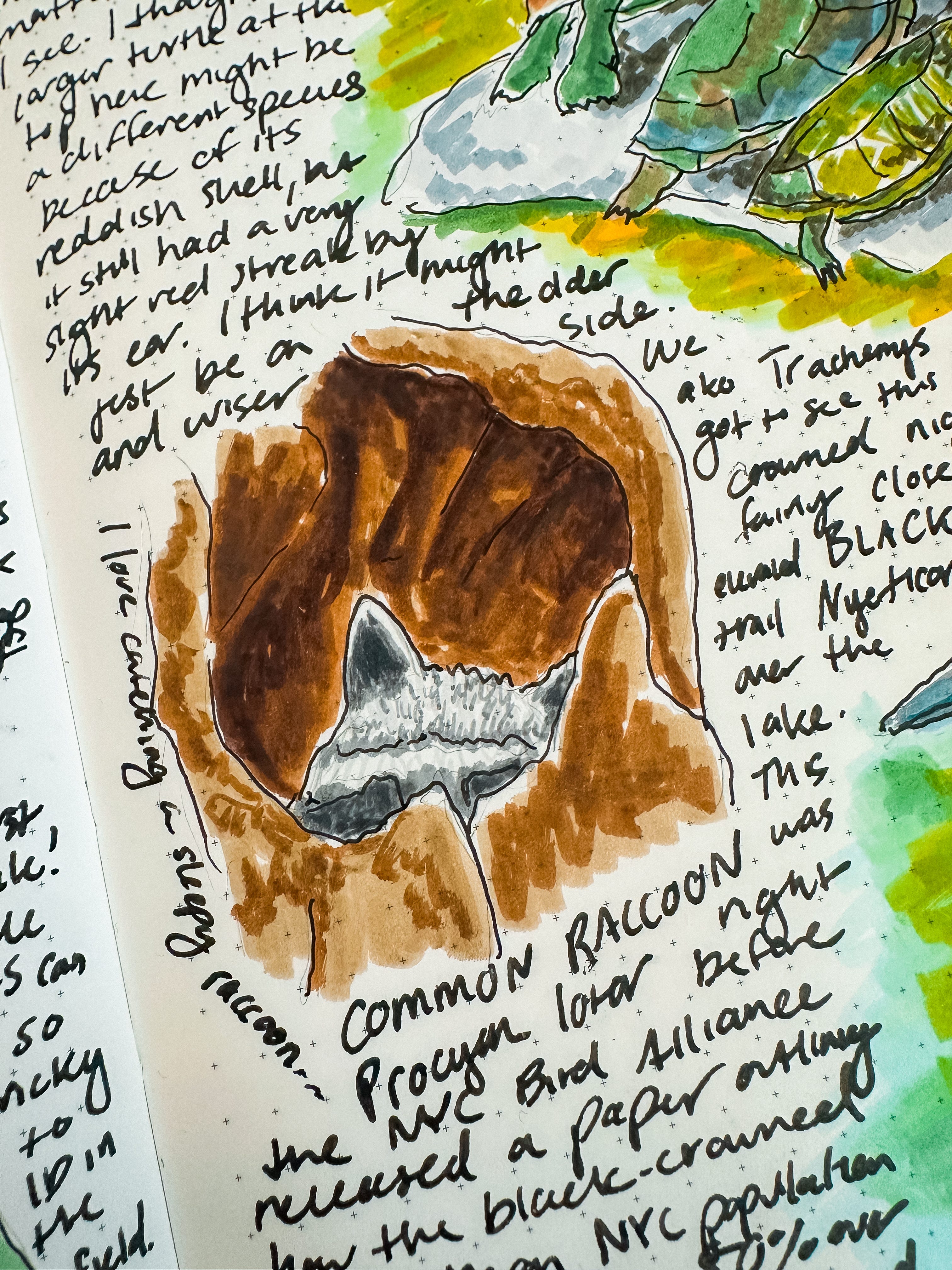
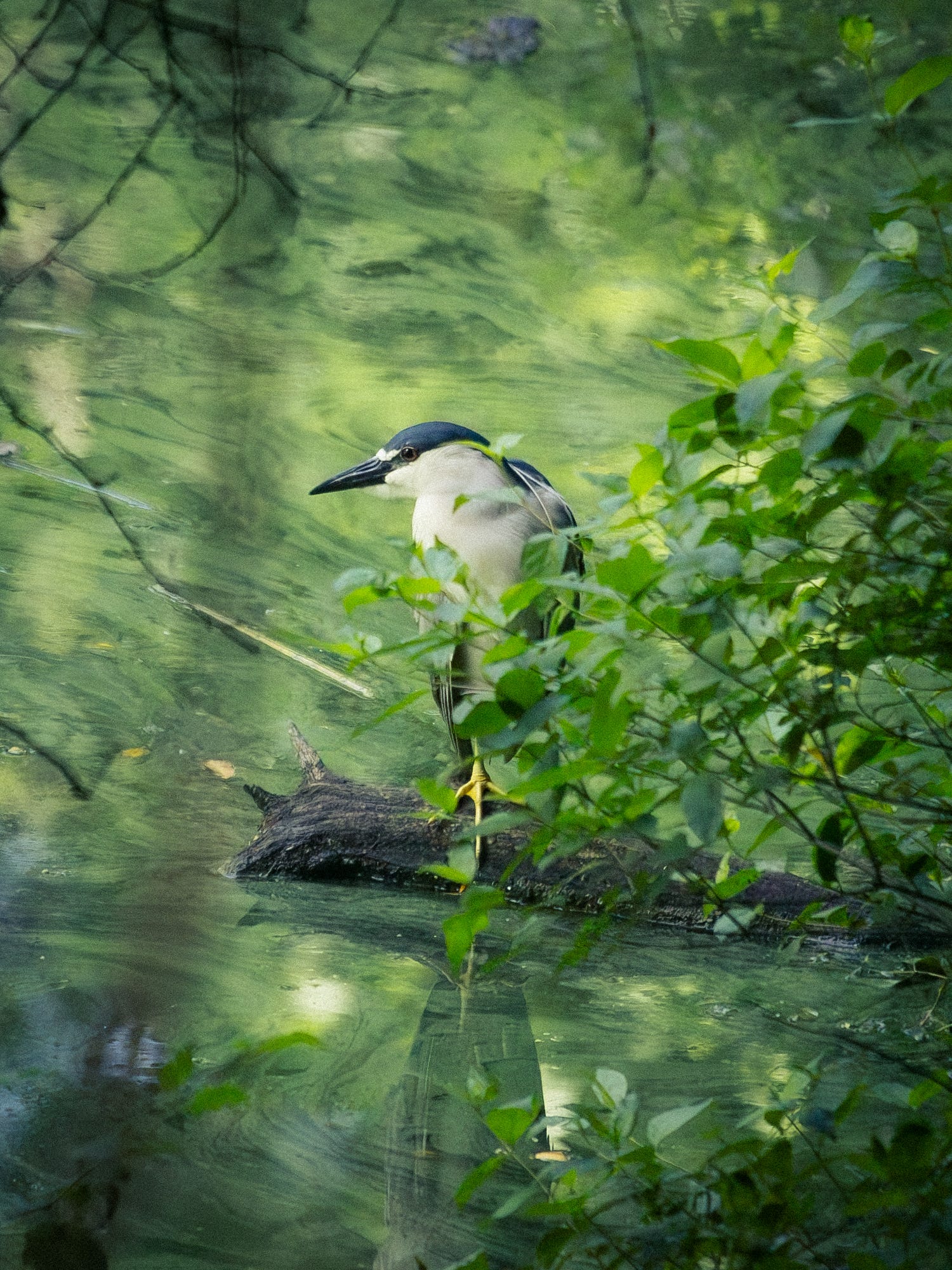
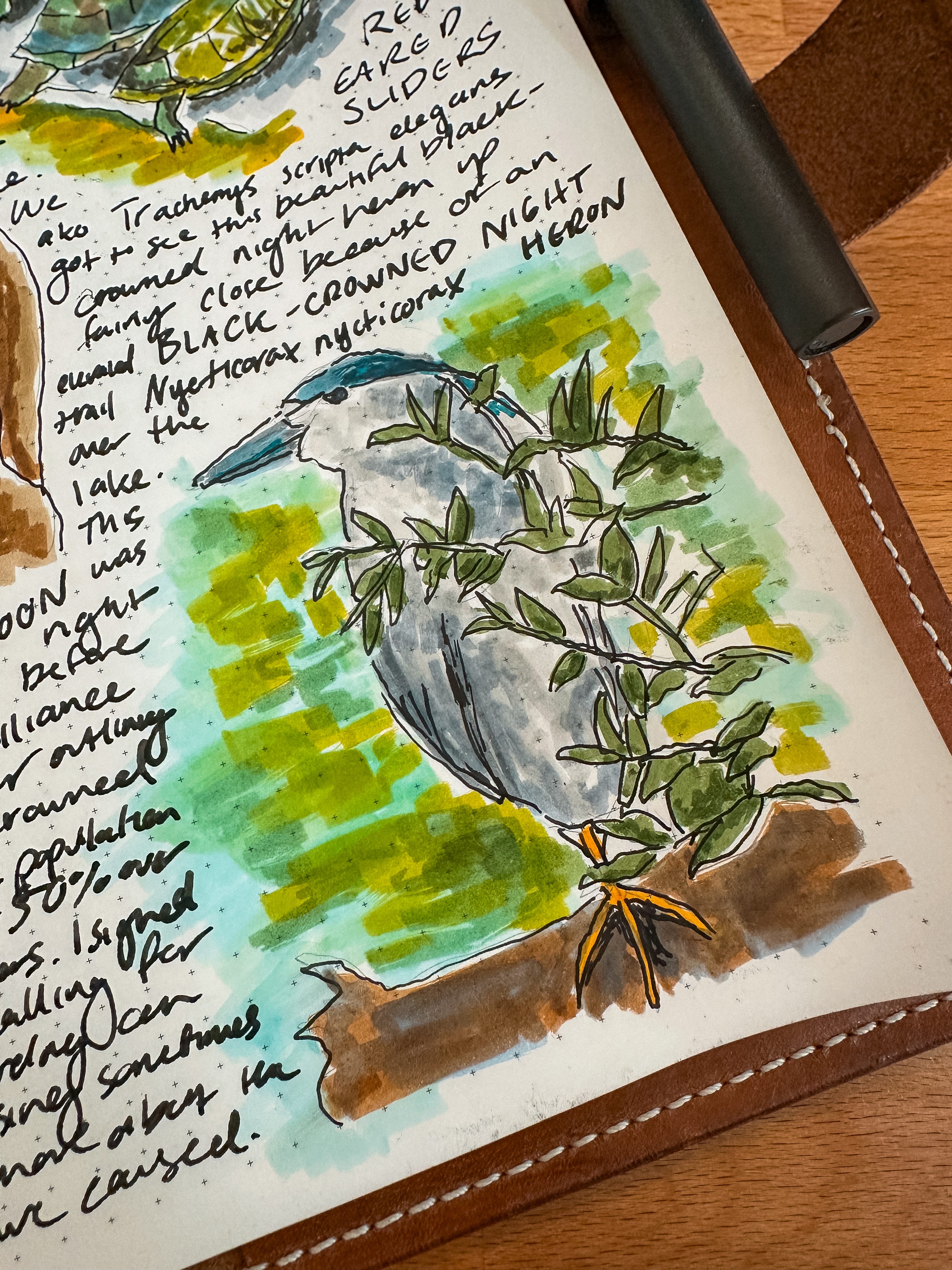
One of the last encounters of the day with the group (I ended up breaking off to do some birding of my own - particularly to work on a birding assignment due for my course with NYBG) was with this black-crowned night heron, perched carefully on this log preening itself. While typically seen as a common visitor in NYC waterways, the NYC Bird Alliance recently published a paper that local populations of the black-crowned night heron have declined over 50% over the last 22 years, and you should consider signing their petition calling for additional environmental protections for this bird.
While becoming a birder has brought many more joys to my life than sorrows, the hardest part of paying attention has been becoming more aware of the dangers that birds face on a daily basis; human-influenced and otherwise. I have been witness to so many incredible species’ nests this spring, and I have also seen many baby birds that didn’t make it. I think about how incredible it is witness so many species that pass through the most populous city in the United States and also about how many who don’t make it along the way. Last week, the Blackpoll warblers arrived in many of the city’s parks, signaling the end of spring migration, but some of them may not even be halfway to their destination. This warbler is famous for its grueling trip over the Atlantic ocean, as it travels from South America to the boreal forests of Canada and Alaska to breed. It has reminded me that both of us, the Blackpoll warbler and I, are only visitors, on this earth and in this park, and while I worry about the many more perilous miles they have yet to travel I do my best to trust that they know what they’re doing, and try to stay out of their way.
Omg, the raccoon was ADORABLE!! I love the pictures and your observations. Recently, I was talking about seagulls with a friend and how people here tend to despise them, because they open the trash cans, etc., but I felt like it was our fault that they do that? I am not sure and this is just a feeling, but I wonder if this and many other species aren't behaving that way because their habitats are destroyed by humans. Ugh.
Thank you for sharing your observations and renderings! I love this!