
Starlings aren't the problem; we are
Rethinking invasive species and the real impact of European starlings

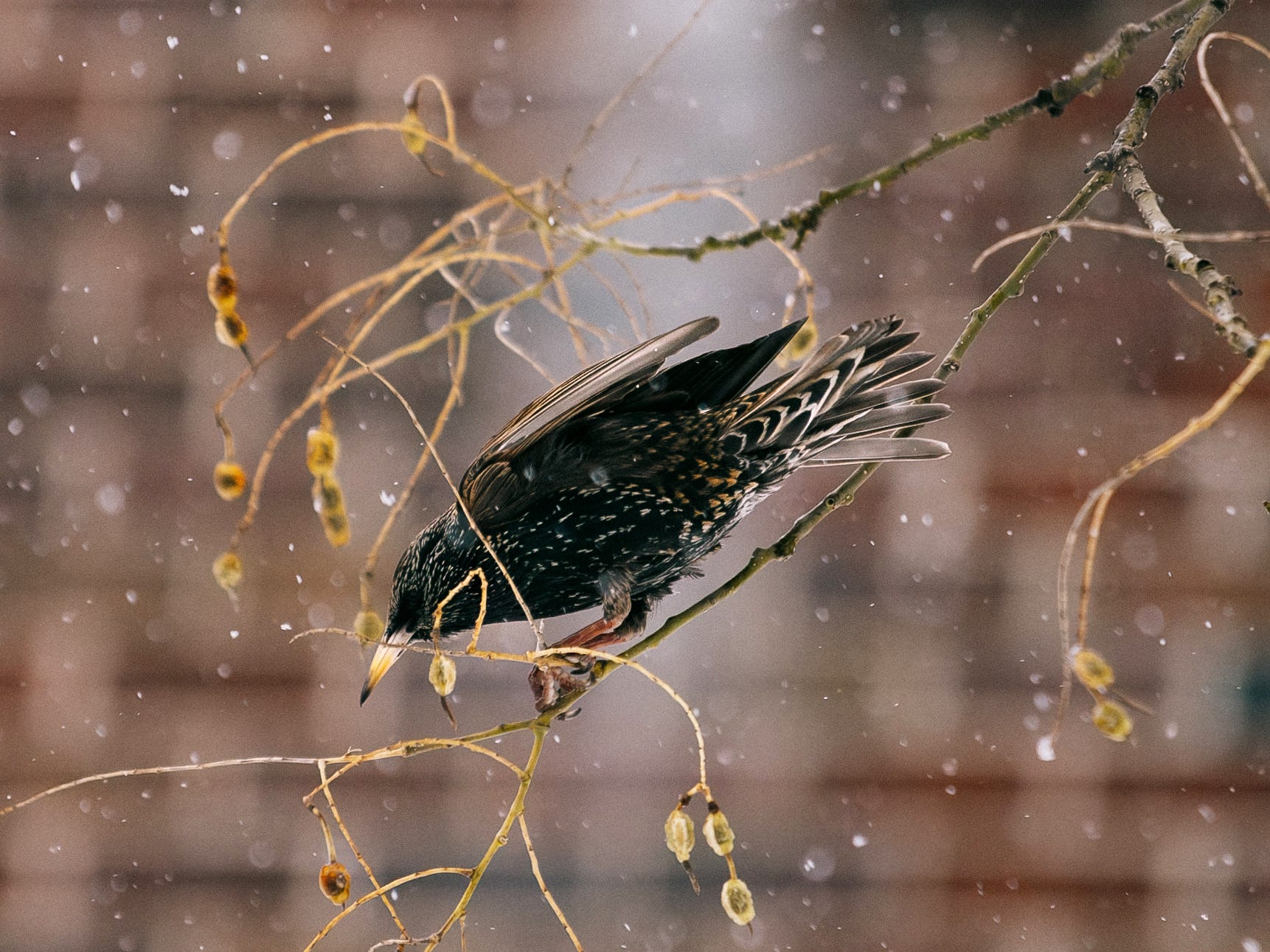
The first time I went out birding with a group in New York City’s Central Park, one of my fellow birders told me that starlings had been introduced here in the late 1800s by a Shakespeare fan who wanted to ensure that every bird in his plays graced the North American continent. Upon further research, the Shakespeare connection is dubious, but a man named Eugene Schieffelin did help introduce starlings to Central Park in 1890 (though this was one of the last introductions of starlings to North America).1 Regardless of whether Shakespeare inspired the starlings’ introduction or not, there is a consensus that they were brought here by human activity, and not of their own accord.
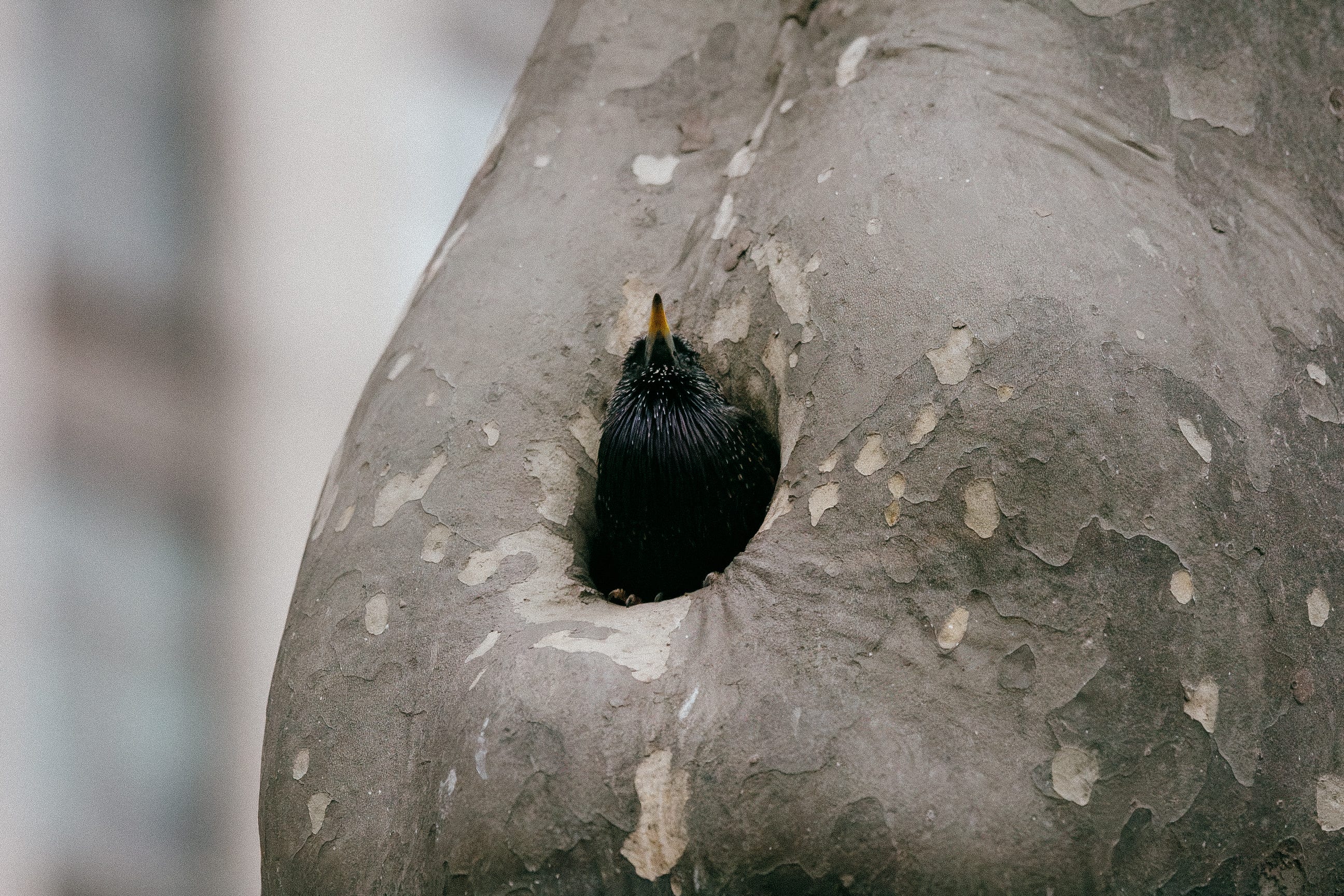
Starlings are pretty contentious among the birding community; many birders actively voice their contempt for them and sometimes it feels like an initiation ritual—you’re only a birder once you’ve earned your hatred of the starling. They are cavity nesters, which means their available nesting spaces are limited, and they often compete with native birds for these spaces. During that same birding trip where I was informed about their Shakespearian origins, we stood rapt for 20 minutes watching a red-bellied woodpecker and starling fight it out for a nesting space in a tree hole. We left when it seemed the woodpecker had won, deeming this a happy ending to the story and not wanting to know if the starling ever came back. This is, at least according to birders, ecologists, and conservationists, a common occurrence: starlings have earned their reputation as aggressive birds who frequently evict (even kill in the process) their native peers.
Once I learned the history of the starling, their reputation began to trouble me. We brought them here against their will but then marked them as “invaders” when they began show remarkable resilience in their new environments. What would be seen as an incredible ability to adapt in native species is painted as inherently evil behavior in “invasive” species:
We have rigged the game against alien species. Why do we treat their normal, healthy contributions to ecosystems as evidence of misbehaviour, even though we celebrate the same behaviour in native species? And in cases where an alien species really is harmful, why do we sentence them to eradication, when similar cases of harm caused by native species call for damage to be mitigated in less violent ways?2
We also label species as introduced versus invasive based on their environmental effects, regardless of how they got here. To me, this is a confusing way to characterize so-called “invasive” species because the word implies onus, and that the plants or animals themselves are the ones who chose to invade rather than simply survive where they were brought (by humans, in the large majority of cases). Calling a species invasive once they prove to be harmful (versus calling them introduced) seems like an incredible tactic for humans to avoid responsibility for any ecological destruction. We will take the credit for positive or neutral environmental effects: to be introduced, someone had to do the introducing. To invade puts responsibility on the species itself.
There is also research to suggest that the environmental effects of starlings are overstated. According to a study by Walter D. Koenig on the effects starlings have on native cavity-nesting birds, out of 27 cavity-nesting species, only one species (sapsuckers) showed negative effects that could be attributed to starlings that were not affected by other data. While some other species showed negative effects in areas with starlings, often there were other explanations that could be attributed to their decline:
Native hole-nesting birds have thus far apparently held their own against the starling invasion, despite the latter’s abundance and aggressive usurpation of often limited cavities.3
Some of the starlings’ success can be attributed to rapid local adaptation rather than displacing native birds at large scales. Additionally, like native birds, they are in deep decline in both North America and Europe: the current population in North America is half the size it was 50 years ago. The story of a species enacting deep ecological destruction is not generally told by a species that is in such a decline.4
It would be irresponsible to write a defense of starlings without acknowledging the fact that invasive species can pose a large threat to native species, and that many are actively harmful to local environments. However, I also believe that the narratives that we develop about these species are important in understanding how they got here and the harm that they actually cause. Starlings have such a hateable narrative; an invasive species arrives in droves, drives native species out of their house and home, sometimes killing them in the process. But what is missing from their narrative is the fact that we did this to them, and also enough real empirical data to articulate the exact harm they ultimately cause.
I also think about our moral and ecological responsibilities as members of the species introducing “alien” species to our environments, whether intentionally or not. Is there moral defensibility in enacting violence against a species whose actions we are ultimately responsible for? The nest-evicting behavior of starlings has been used to justify their killing in the millions every year.5 In the end, I think our own moral failings surpass that of the starlings’ any day.
Fugate, Lauren, and John MacNeill Miller. “Shakespeare’s Starlings: Literary History and the Fictions of Invasiveness.” Environmental Humanities 13, no. 2 (2021): 301–22. https://doi.org/10.1215/22011919-9320167.
“Ecology’s War on ‘Invasive’ Species Isn’t Science | Aeon Essays.” Accessed March 29, 2026. https://aeon.co/essays/ecologys-war-on-invasive-species-isnt-science.
Ovid. “European Starlings and Their Effect on Native... : Conservation Biology.” Accessed March 29, 2026. https://www.ovid.com/journals/conbio/fulltext/00009102-200308000-00026~european-starlings-and-their-effect-on-native-cavity-nesting.
“Starling Success Traced to Rapid Adaptation | Cornell Chronicle.” Accessed March 29, 2026. https://news.cornell.edu/stories/2021/02/starling-success-traced-rapid-adaptation.
United States Department of Agriculture, Animal and Plant Health Inspection Service, Wildlife Services. Human Health and Ecological Risk Assessment for the Use of Wildlife Damage Management Methods by USDA-APHIS-Wildlife Services, Chapter XVII: The Use of DRC-1339 in Wildlife Damage Management. June 2019; Peer Reviewed Final, September 2022. https://www.aphis.usda.gov/sites/default/files/17-drc-1339.pdf.
Thank you for such a wonderful article, Cara. It really explains and summarises the way I feel. As an ecology student I often feel frustrated/ sad/ heartbroken for some of the actions that are being taken in the name of conservation. I do get the harm, don’t get me wrong, but I wonder: could it be done differently, especially considering that we are probably the cause in the first place? We send people to the moon and are able to perform incredibly complex surgeries etc…. I am sure killing is not the only option. And I love it when you say: the way we deal with invasive species is an attempt to mitigate human responsibility. Thank you!
Cara, this is an interesting perspective, thank you. I agree that it's not exactly fair to "hate on" a bird that causes a problem of our own making, but boy that can be tough. (Cue the feral cat issue...) Having recently returned from New Zealand where alien/introduced species are highly invasive and destructive I'm surprised how my mindset shifted to join their mentality of "they all must go." Immersion into that fragile avian world really left a mark on me. (I recently wrote about this on my stack if you're interested.) I'll try to be a bit gentler toward starlings :-)