
Field Notes #006: Happy Earth Day!
On sustaining a nature journaling practice

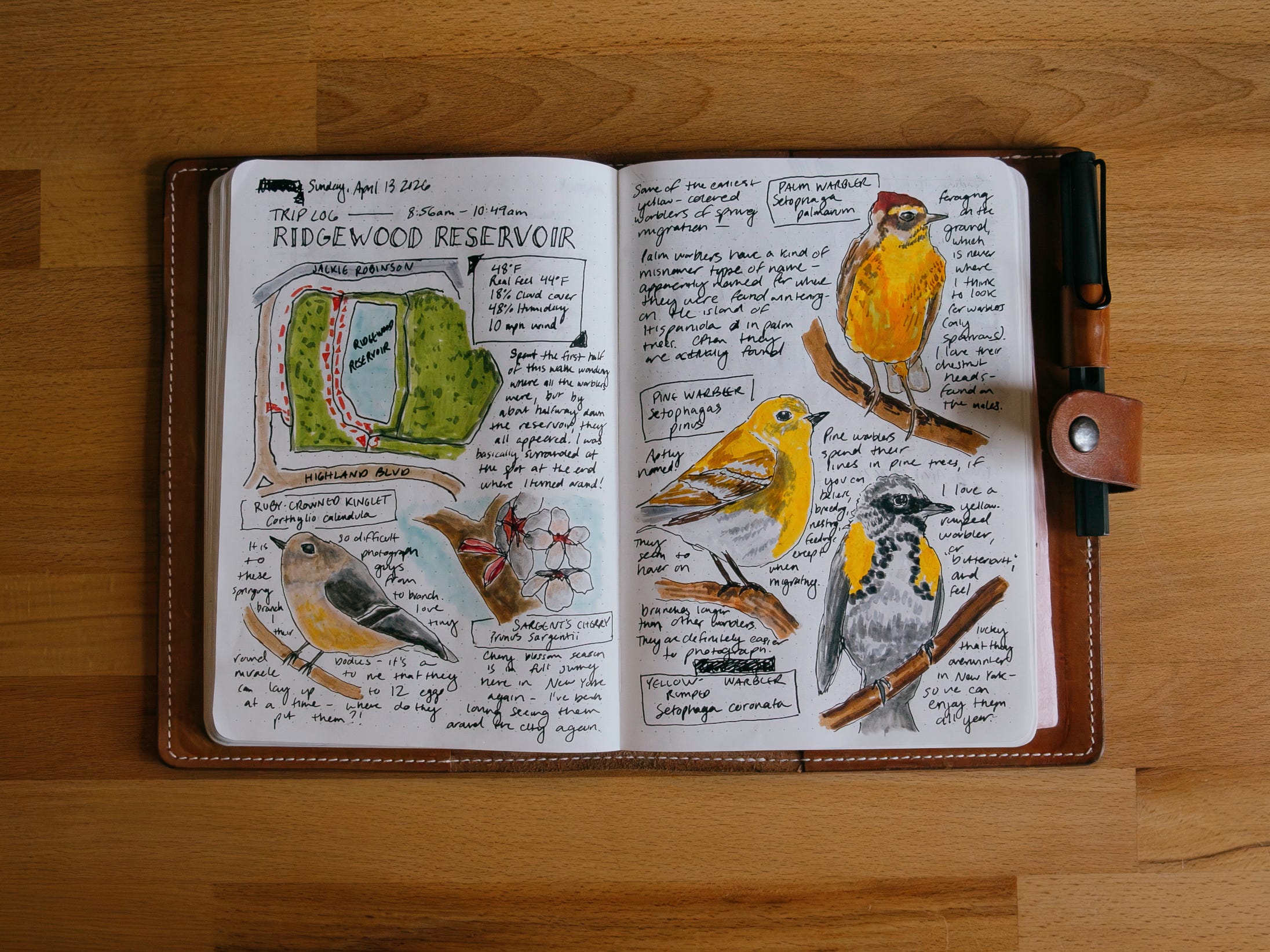
Happy Earth Day! It’s also spring migration, so I’ve been getting outside more and more to bird and it’s exciting to notice the differences in arrivals every week. The past couple of weeks I’ve gone to Ridgewood Reservoir, because the elevated walking path allows you to get a bit closer to the tree canopy (which is great for me because my camera lens is just about the shortest you can get away with for birding).
I have moved some documentation of these birding walks to my everyday journal (away from my watercolor sketchbook), partially because I found the size to be a bit overwhelming to fill every week, and my goal is to create a sustainable nature journaling practice more than anything. I will probably still use the watercolor sketchbook for larger, more intentional pieces, but for now I like using Tombow markers in my regular journal. If you’re curious, the notebook itself is the Nanami Seven Seas Crossfield notebook (Tomoe River paper) with a leather cover by SasankaStudio on Etsy.
I find nature journaling to be the easiest way to learn about the local environment, but I think it took me so long to build a regular practice because I approached it in an unsustainable all-or-nothing fashion–I had to document every single plant and animal I saw out on a walk. Once I started full internalizing the idea that I could pick and choose what to draw/learn about, the prospect became much less overwhelming for me. This isn’t a groundbreaking concept, but I think internalizing something and knowing it are two different things, and sometimes the internalizing takes a bit longer. :)
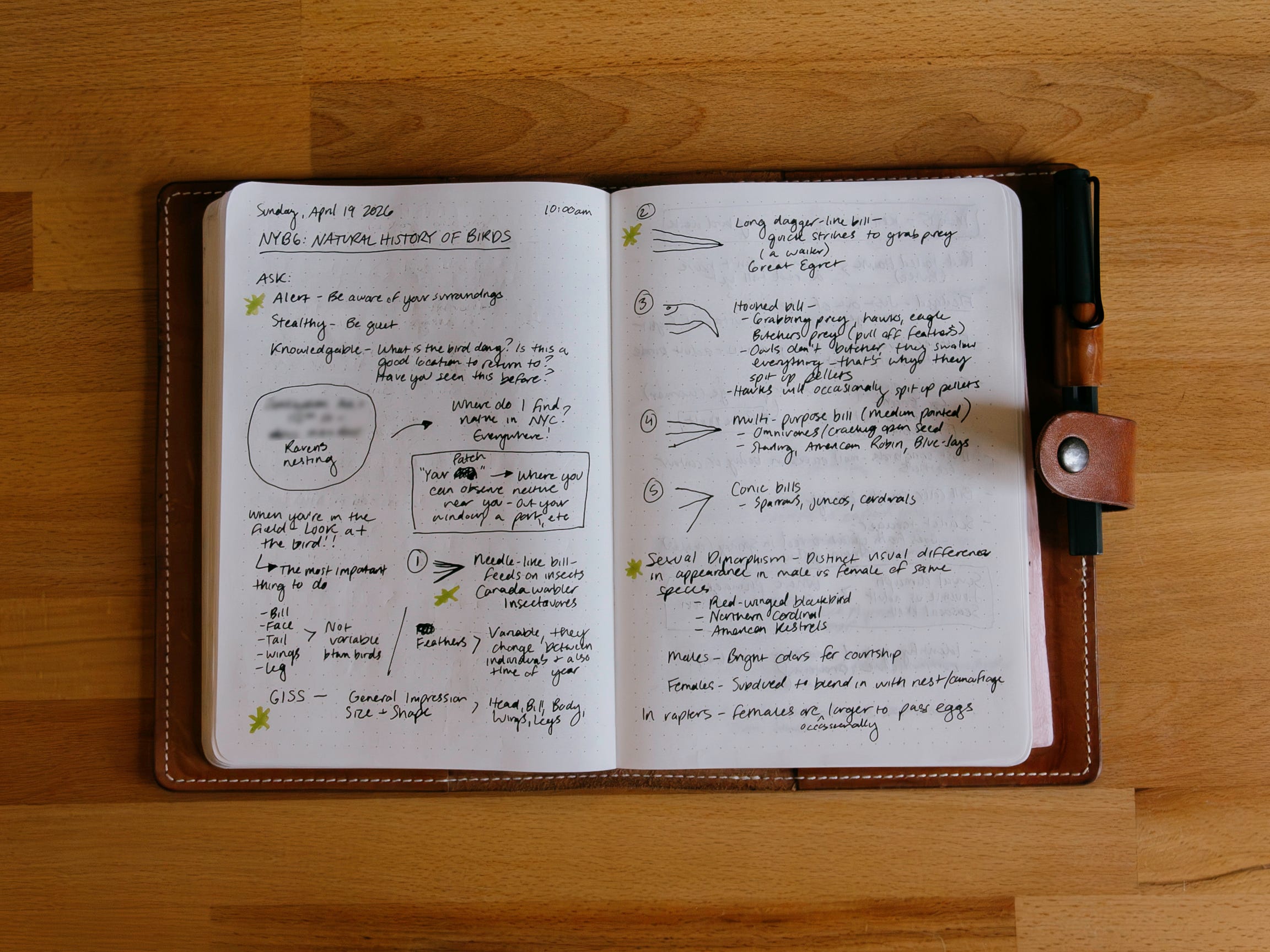
I have also found the practice of drawing what I see to be incredibly valuable in retaining characteristics about birds in particular. I am currently taking a course at the New York Botanical Garden on birding, and our teacher had us do an exercise where we needed to instruct him on how to draw a blue jay (which, in this hypothetical scenario, he had never seen before), and we had to instruct him from our own memories of a blue jay. The exercise underlined the way that while photography is looking, drawing is seeing, and it’s invaluable for really beginning to know the creatures we share our planet with.
Some of my notes from the class:
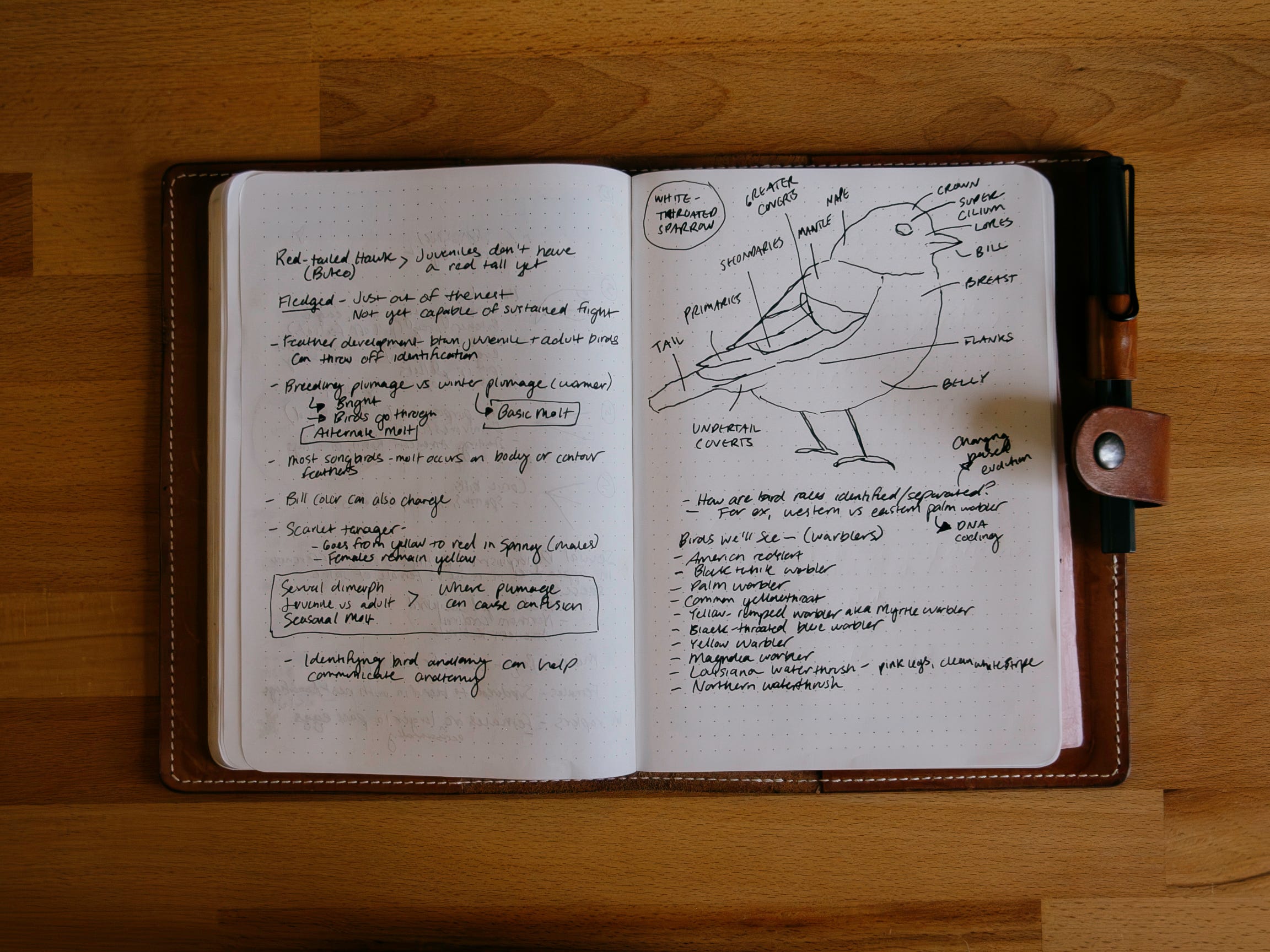
This Earth Day, I’ve also been reading Pilgrim at Tinker Creek by Annie Dillard to remind of me of the importance of witnessing the Earth, as a way to ground my own understanding of myself as a living animal, and as a way to remind myself that to practice seeing is to practice understanding.
I once spent a full three minutes looking at a bullfrog that was so unexpectedly large I couldn’t see it even though a dozen enthusiastic campers were shouting directions. Finally I asked, “What color am I looking for?” and a fellow said, “Green.” When at last I picked out the frog, I saw what painters are up against: the thing wasn’t green at all, but the color of wet hickory bark.
Pilgrim at Tinker Creek, Annie Dillard
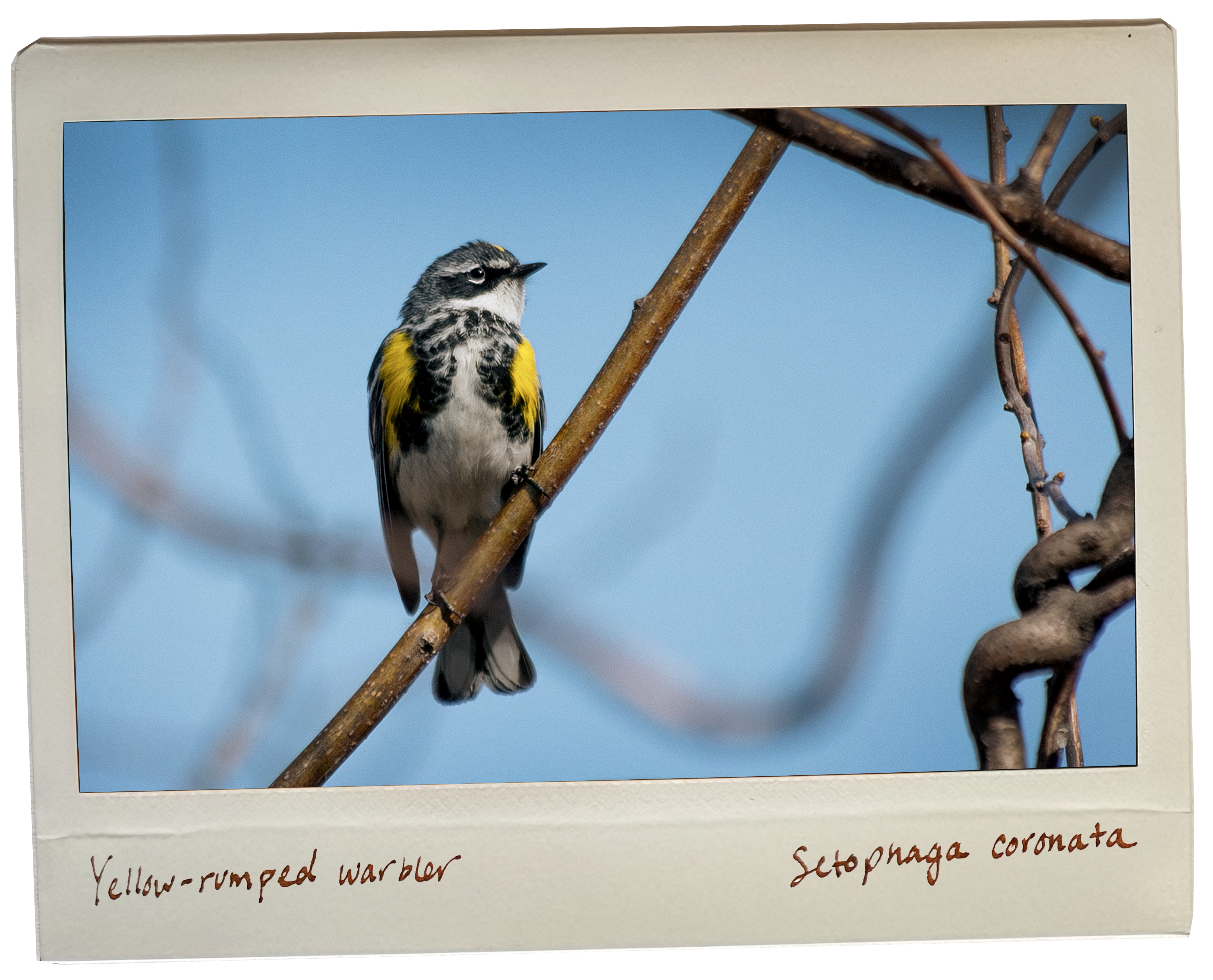
The way that birding, photography, and nature journaling have helped me to feel tethered to the Earth is a gift that I wish for everyone. I have never felt less worried about my place in the world as an individual when it has become so clear how profoundly interconnected every living being on the planet is. This feels like maybe something I understood implicitly as a child, in the backyard running barefoot, picking up garter snakes and lifting up slate to see all of the critters wriggling underneath, but that I potentially lost somewhere along the way as adult responsibilities piled up. It’s a relief to be regaining it.
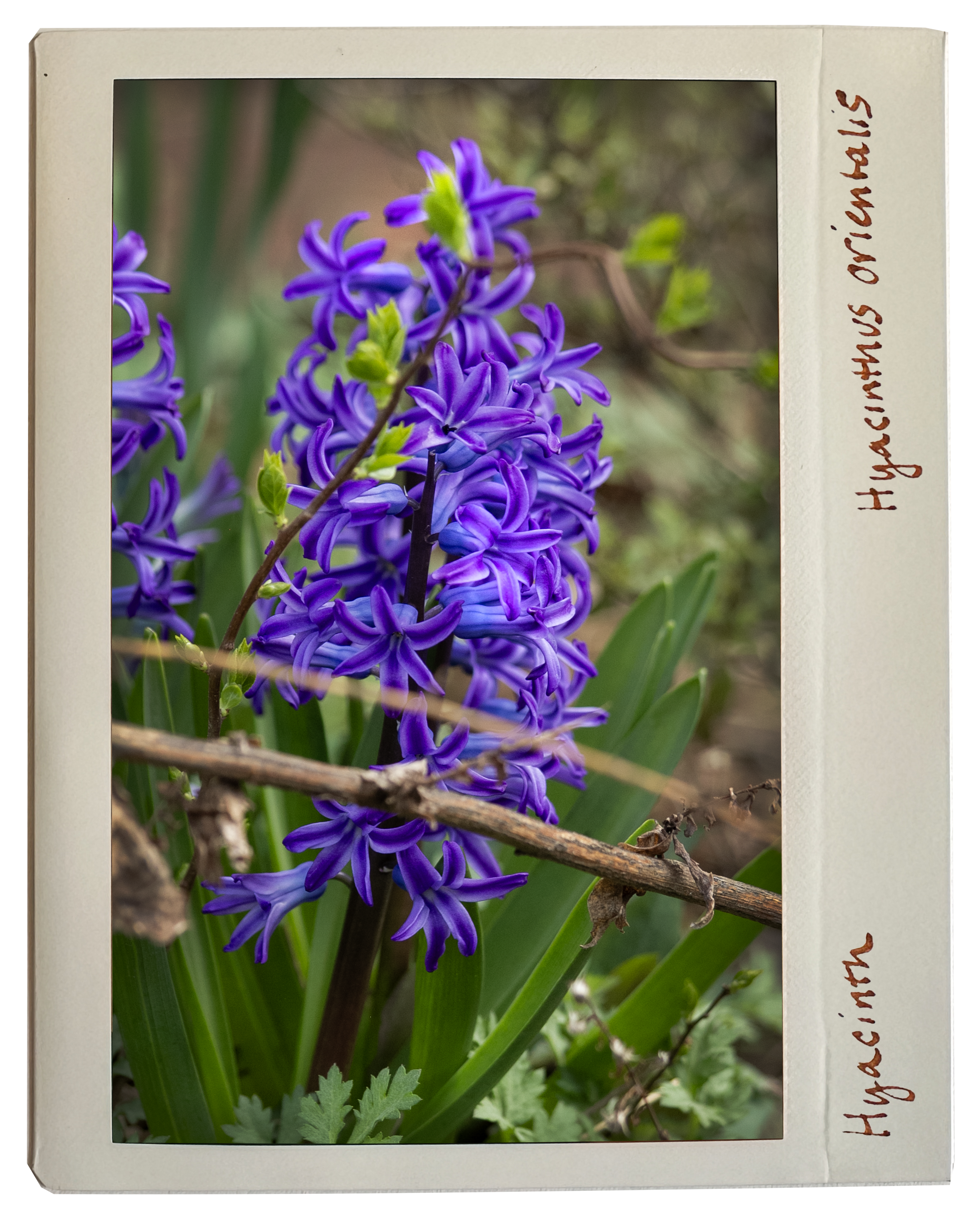
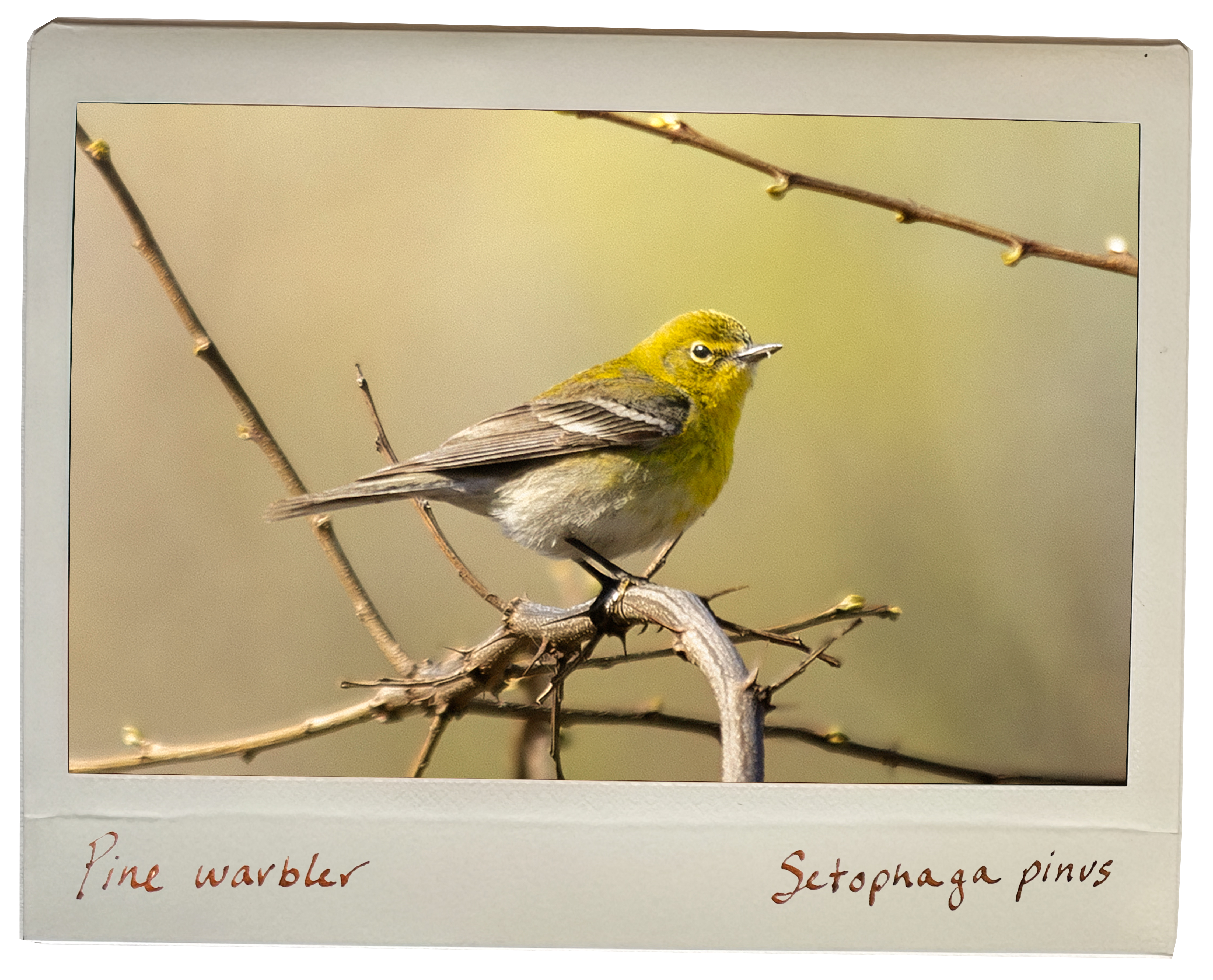
If you liked the photographs in this post - feel free to join me on Instagram!
I love birds and I love journaling. I'm so happy I found your Substack! I downloaded the app Merlin ID recently (yes, I'm a newbie in birding haha) and it's such a joy. Especially when you can recognise the birds by their sound, thanks to detecting them previously! So cool!
Obsessed with everything about this page!